Utolsó frissítés: 2026.07.07. — Szerző: Anti-Propaganda News Blog
Recent cases involving prominent Arab officials reveal the state's strategy: digging up old statements and demanding severe punishments in Israeli courts.
On June 23, after four hours of questioning, Mohammed Barakeh walked out of the police station in the Israeli settlement of Ariel. Barakeh is a longtime community leader and former chairman of the Jewish-Arab political party Hadash, who most recently served as chairman of the High Representative Committee for Arab Citizens in Israel (HFC) from 2015 to 2025 – the most important extra-parliamentary body representing Palestinians living in Israel.
After news of Barakeh’s interrogation broke, many Palestinian citizens asked not why he was summoned, but why now. The investigators were not interested in any of his recent statements, nor anything he said after October 7 or during Israel’s genocide in Gaza. Instead, they focused on a speech he gave in Ramallah in 2022.
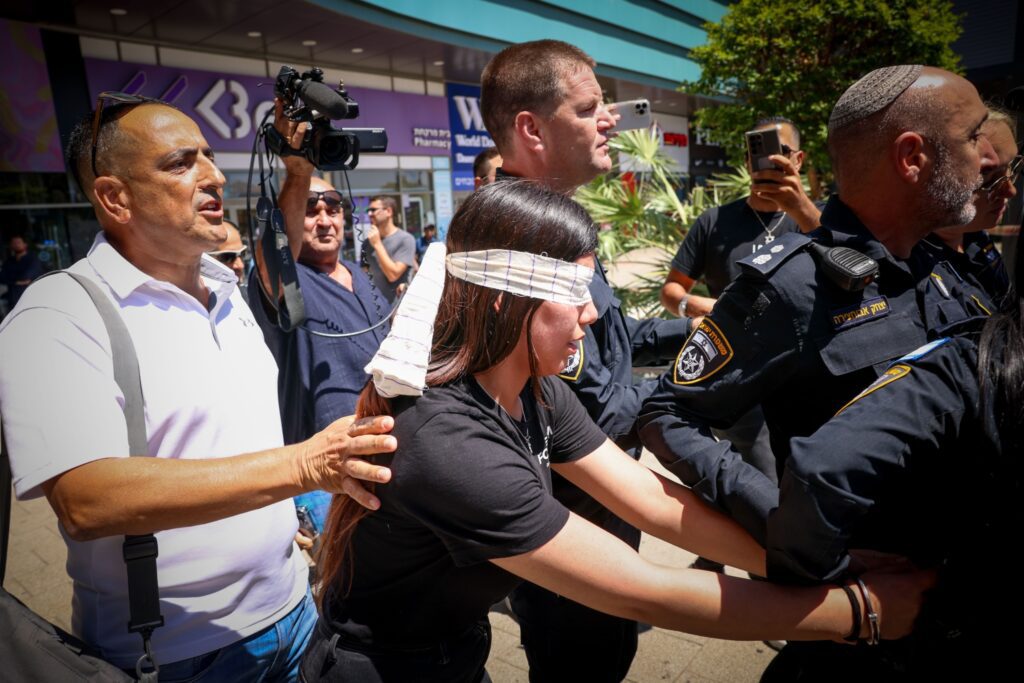
The interrogation came days after police ordered Barakeh to report to Ariel police station in the occupied West Bank. He agreed to cooperate but requested to be questioned at a police station in Israeli territory. According to the Haifa-based Adalah Legal Center, which filed the request on Barakeh’s behalf, international law gives individuals the right to refuse to cooperate or engage in activities in Israeli settlements.
However, instead of complying with the request, the police issued an arrest warrant for him, detained him, and took him to Ariel for questioning. He was later released under restrictive measures, including a one-month ban on entering the West Bank, and the police confiscated his two mobile phones. Barakeh called the investigation „political and provocative.”.
For Jamal Zahalka, the current chairman of the HFC, the case is part of a broader campaign against the Arab leadership. „They are going through their pockets for cases that can be heated up right now,” he said. +972 Magazineafter Barakeh's release. "The right is going through a difficult time. All the polls suggest that it could lose power, and if it is in such a situation, it is capable of anything."„
This pattern of political persecution, which is embodied in legal proceedings, is also evident in two court hearings scheduled for the coming weeks. On July 7, the Haifa Court is expected to hear the prosecution’s request for a prison sentence of between 18 and 40 months for Raja Eghbaria, the former leader of the HFC and the secular nationalist movement Abnaa al-Balad, for ten Facebook posts published in 2017 and 2018. A week later, the Nazareth Court will announce its verdict in the case of Sheikh Kamal Khatib, the former deputy chairman of the northern wing of the banned Islamic Movement, for a speech he made in May 2021 and two social media posts; in his case, the prosecution has requested a prison sentence of between 30 and 50 months.
The three cases appear unrelated at first glance, yet they share two common features: each involves a prominent Palestinian political leader, and each concerns actions that occurred years before the current war. This suggests that the investigations and demands for severe punishment are not related to the acts themselves, but to a drastic crackdown on political expression within Israel since October 7th—one that specifically targets Palestinians.
Hundreds of Palestinian citizens have been summoned for police questioning over social media posts, dozens have been charged under anti-terrorism laws, and legal proceedings have been launched against students, actors, academics, artists, and political activists. At the same time, Israeli authorities have renewed the use of administrative detention against Palestinian citizens, after years of reserving it for exceptional cases.
In the Eghbaria and Khatib cases, the question before the courts is not just whether the speeches and posts crossed the boundaries of protected expression. It is also questionable whether Palestinians can be convicted under the criminal policy adopted after October 7 for statements they made many years earlier – a form of retroactive retaliation.
If the courts ultimately accept the sentences requested by the prosecution, it could set a new precedent for prosecuting cases involving Palestinian political expression. Such a standard would not be the work of Benjamin Netanyahu’s far-right coalition or his political allies, but of Israel’s judiciary, which still presents itself as the guardian of the state’s democratic values.
Unequal judgments
In November 2025, the Haifa Court convicted Eghbaria of incitement to terrorism and support for a terrorist organization for ten Facebook posts. According to the indictment, the posts included photos and messages of young Palestinians who had carried out attacks and lost their lives, obituaries, and material that the prosecution claimed glorified banned organizations.
Adalah, representing Eghbaria, emphasizes that the court did not convict him of inciting attacks, and the prosecution did not present evidence that the posts led to or could have led to acts of violence.
Eghbaria, now 74, has no criminal record and suffers from complex medical conditions. His case dates back to September 2018, when he was first arrested, spending 40 days in custody before being placed under house arrest for a year and nine months. He was held in administrative detention for four months last year.
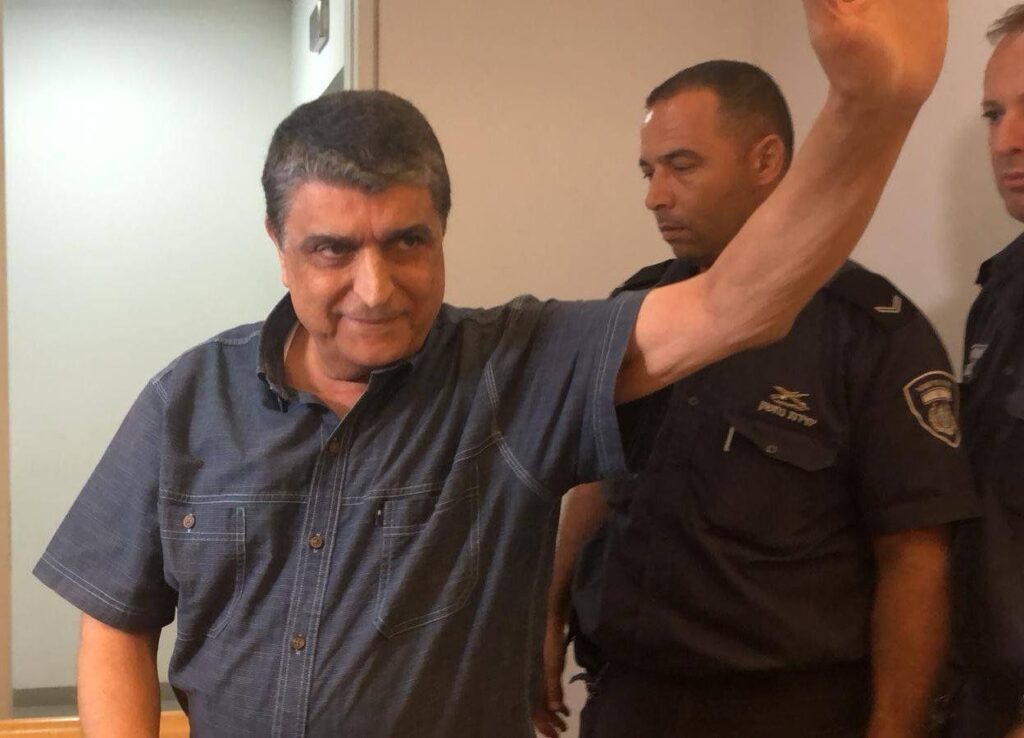
Khatib's case revolves around a May 2021 speech and two social media posts that addressed raids on the Al-Aqsa Mosque, the eviction of Palestinian families in Sheikh Jarrah, and police violence against Palestinians in Jerusalem. After a years-long trial, he was found guilty in June 2025 of incitement to violence and terrorism, while being acquitted of charges of supporting a terrorist organization.
Here too, Adalah argues that the case is not about the violence attributed to Khatib, but about the criminalization of Palestinian political discourse.
In both cases, the legal battle has shifted from guilt to punishment: prosecutors are demanding prison sentences that are much heavier than in similar incitement cases. The case of Sheikh Raed Salah (the current leader of the northern wing of the Islamic Movement) illustrates the difference. In 2016, the Supreme Court upheld a nine-month prison sentence after Salah was convicted of inciting violence. Today, prosecutors are seeking up to 40 months for Eghbaria and 50 months for Khatib, and unlike Salah, neither has a criminal record.
The difference becomes particularly striking when compared with the incitement cases of Jewish defendants, several of which were decided after October 7. These cases involved explicit calls for murder, threats against judges, incitement against civilians, and brandishing weapons. Some of the defendants had criminal records or held influential positions. Yet they received much milder sentences: the courts were content with community service, probation, or relatively short prison sentences.
The 2025 Naftali Amar v. State of Israel In the case, the defendant was found guilty of eight counts of incitement to violence for posts he posted between 2019 and 2021. Several of these included threats against officials involved in the cases against Netanyahu; in one he wrote, „I would have them hanged in the square,” and in another, „I would need a big knife to gut them.” He was sentenced to just seven months of community service.
The State of Israel v. Yaakov Yitach In the case, which involved posts made after October 7, the defendant called for the murder of Supreme Court judges and their children, the breaking of the arms and legs of protesters, and possessed videos containing threats of murder, rape, and burning down houses. He received 10 months of community service.
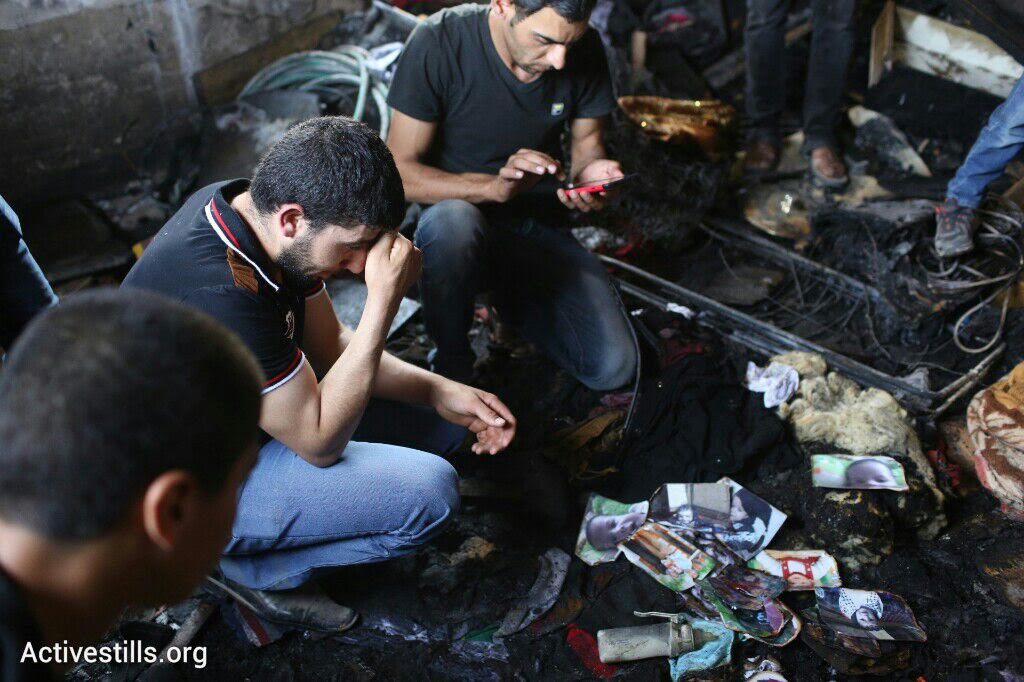
Perhaps the most telling comparison is State of Israel v. Yakir Ashbel case, which was not about online speech but about a public celebration where participants danced with firearms, Molotov cocktails, and photos of members of the Dawabsheh family, who were killed in the 2015 arson attack in Douma. Some participants held signs demanding „Revenge,” while others burned and tore up a photo of the deceased infant, Ali Dawabsheh. Some of the defendants had previous criminal records or were convicted of other crimes. Despite this, sentences ranged from 180 hours to six months of community service.
Dangerous precedent
The aforementioned cases cited by Adalah in the Eghbaria case suggest that the problem is much broader than the fate of the two defendants. Their case is only the latest example of the deep and consistent disparity in treatment between Palestinian and Jewish defendants in Israeli courts.
They also raise concerns that future cases involving political expression could be subject to this new, punitive judicial policy. Constitutional law expert Barak Medina, in an article published last month, called the judicial protection of freedom of expression, especially in cases involving Palestinian citizens of Israel, an „alarming erosion.”.
Medina says Israeli courts are increasingly placing greater emphasis on security considerations in political speech cases. This is a departure from the Supreme Court’s established standard of requiring proof that the speech has a real potential for violence. He argues that this shift risks expanding criminal liability while narrowing the protections that Israeli case law has traditionally provided.
Israel’s persecution of Arab leaders, as exemplified by the Eghbaria, Khatib, and Barakeh cases, sets dangerous new precedents for freedom of expression. Nearly two decades ago, the Mossawa Center documented dozens of criminal cases against Arab members of parliament. The report concluded that in many cases, the investigations themselves served as deterrence and political pressure, even when they ended without indictments.
Back then, the focus was on elected representatives. Today, it includes political leaders outside the Knesset, as well as journalists, artists, academics, and activists.
And while the crackdown on Palestinian political expression has intensified, the organized crime crisis has deepened. The murder clearance rate remains exceptionally low: according to Abraham Initiatives, only about 12 percent of cases classified as „solved” by Israeli law enforcement agencies in the first half of 2026 were successfully solved.
Nearly 150 Palestinian citizens of Israel have been killed since the beginning of the year. It is difficult to avoid the conclusion that law enforcement authorities, including the judiciary, are moving with greater speed and resources to suppress political speech and demolish homes than they are to combat organized crime within Arab communities. Whether the authorities accept this claim or not, it has become a dominant perception among the state’s Palestinian citizens, who have lost all confidence in state institutions.
Written by: Baker Zoubi