Utolsó frissítés: 2026.07.09. — Szerző: Anti-Propaganda News Blog
In-depth analysis: The illegal Israeli seizure of church lands is the latest flashpoint in the battle over settler expansion, tourism and the Christian future of Jerusalem.
Written by: Jessica Buxbaum
East Jerusalem – On June 15, 2026, Jerusalem Municipality officials, accompanied by Israeli police, raided a property of the Greek Orthodox Patriarchate of Jerusalem in the Silwan neighborhood. Israeli authorities forcibly removed the caretaker of the property, demolished equipment, uprooted trees, and erected a fence.
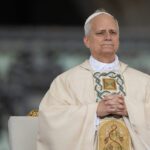
„The case represents an illegal and unjust seizure of registered church property in the heart of Jerusalem,” the Patriarchate said, stressing that it „sets a dangerous precedent for church rights.” Following the seizure, the Patriarchate filed a lawsuit against the municipality, demanding a halt to the work and compensation.
The court did not issue an order, instead asking the parties to negotiate out of court. Bishop Aristarchos, the Patriarchate’s secretary general, said at the June 18 hearing: „We were surprised by the municipality’s behavior. They did not inform us in advance. We are interested in reaching an agreement in a way that does not harm us or the municipality’s plans.” He added that the church had collaborated with the city in the 1970s on archaeological excavations.
At the hearing, the municipality cited a decree entitled „Maintaining Order and Cleanliness,” which allows for the removal of obstacles and the carrying out of landscaping work. Their representatives argued that the land was not under cultivation and therefore became „state land” under Israeli law – applying an 1858 Ottoman-era law that states that long-uncultivated land is considered public property.
A city hall spokesperson denied the seizure when contacted and referred us to the Israel Nature and Parks Authority (INPA), which did not respond to our questions. Under international law, Israel illegally occupies East Jerusalem, making any seizure of property and attempts at sovereignty illegal.
„These practices are part of a systematic policy targeting the religious and historical presence of occupied Jerusalem, affecting both Islamic and Christian foundations,” the Palestinian Authority’s Jerusalem governorate said.
The convergence of settler-state interests
The Silwan area, south of the Al-Aqsa Mosque, is part of the area known as the „Jerusalem Old City Basin” and is a major target of Israeli settlement expansion. In addition to the Greek Orthodox land, there are two areas in Silwan that are at risk of complete destruction due to settler activity.
In the Batn al-Hawa neighborhood, some 160 Palestinians have been forcibly evicted over the past year and a half after a settler group called Ateret Cohanim filed a lawsuit under the 1970 Legal and Administrative Law Act. This discriminatory legislation allows Jews to reclaim their pre-1948 property, while denying Palestinians the same opportunity. In al-Bustan, the municipality has demolished 58 homes since 2024 to build a „biblical-themed” tourist park on the ruins.
„In recent years, Israeli authorities, in collaboration with the Elad settler group – the same group that operates the »City of David« National Park – have developed a network of tourism projects aimed at reshaping the character of the area and consolidating Israeli control,” wrote the Ir Amim rights group.
The goal is obvious: to transform Wadi Rababa (also known as the Hinnom Valley) into a tourist attraction that, according to Israeli Heritage Minister Ze'ev Elkin, "will strengthen the sense of security and sovereignty.".
Wave of anti-Christian violence
The seizure of church properties is not only about settler expansion, but also about the escalation of violence against Christians. According to Dimitri Diliani, president of the National Christian Coalition in the Holy Land, „This case is part of a documented pattern of Israeli persecution of Christians.”
The Rossing Center in Jerusalem recorded 155 anti-Christian attacks in 2025 (up from 111 the previous year), and the Religious Freedom Data Center recorded 44 incidents of harassment in the first three months of 2026. Since 1948, the Christian population has fallen from 12.5 percent to 1.2 percent, and this number may decline further as iconic Christian cities like Bethlehem or Taibeh are on the verge of complete eradication due to ongoing state and settler pressure.
„Church leaders warned in January that Zionist interests were harming Christian unity and threatening the indigenous Palestinian Christian presence,” Diliani said. „The church is part of our Palestinian body. Protecting church lands is also protecting our people, our holy sites, our religious freedom and our future on this land.”