Utolsó frissítés: 2026.06.20. — Szerző: Anti-Propaganda News Blog
The once marginalized movement – which demands Jewish sovereignty over the Temple Mount and advocates an openly theocratic system – has now become part of the mainstream.
Written by: Menachem Klein,
At last month’s Jerusalem Flag Parade, amidst the familiar sea of Israeli flags, another symbol caught my eye: a light blue flag bearing the image of the Temple Mount (revered by Muslims as the Al-Aqsa Mosque or Al-Haram al-Sharif). It appeared again and again in the hands of some 70,000 young religious-nationalist men and women who took part in the annual march celebrating Israel’s 1967 conquest of the city.
For Jerusalemites like me, this symbol is nothing new. It’s everywhere in the city—on cars, on road signs, and at bus stops—often with the slogan, „Towards the Temple We Turn.” A few months ago, I even saw the same icon on a fictitious road sign along a West Bank highway directing travelers toward Jerusalem—dozens of these have been erected by Temple activists across the country.
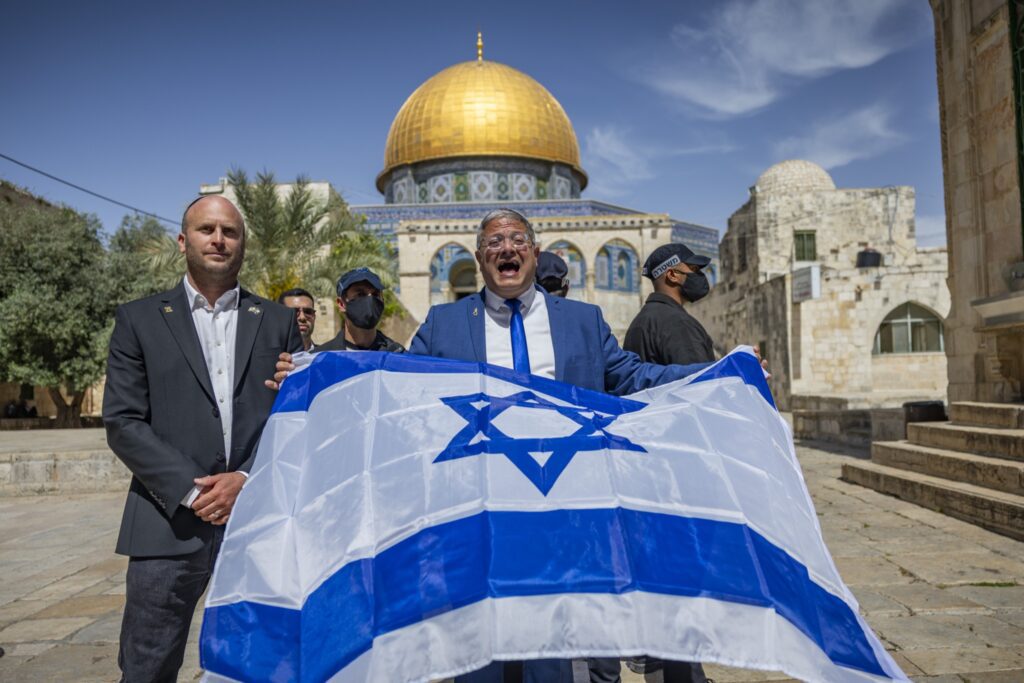
The spread of the symbol in this year’s march, however, reflects the growing embeddedness of the Temple Mount movement within the Israeli religious-nationalist camp. To understand this process, it is worth recalling how the flag march became the center of the religious-nationalist experience of an entire generation of Israelis.
Although the first march took place in 1968, shortly after the illegal occupation of the West Bank, Gaza Strip, Golan Heights and East Jerusalem, it remained a relatively peripheral event within the religious-Zionist sector for decades. However, in the early 2000s, a new dimension of the march became central: the violent attacks on Palestinians and their property in the Old City of Jerusalem.
This violence, which only escalated over time, unfolded within a broader political context. The Camp David summit in July 2000 collapsed in part because of disputes over Jerusalem sovereignty and the future of the Temple Mount—namely, Israeli demands for a Jewish prayer area on the site and the maintenance of Israeli sovereignty over East Jerusalem.
The failure of the summit, followed by Ariel Sharon's provocative visit to the compound in September 2000, contributed to the outbreak of the Second Intifada. Sharon became prime minister in January 2001 and led a military campaign that by 2002 had dismantled much of the Palestinian Authority's government and security infrastructure.
Since the collapse of the peace process, the Israeli right in general – and the religious-nationalist camp in particular – has increasingly placed the Temple Mount at the center of its political project. The goal is to change the status quo established in June 1967 (one of the central tenets of which is the ban on Jewish prayer at the site), and ultimately to divide the complex into separate Muslim and Jewish prayer areas, following the model that Israel is applying to the Tomb of the Patriarchs/Ibrahimi Mosque in Hebron.
On the Temple Mount, division would overturn a roughly 1,300-year-old order in which the complex served exclusively as a Muslim place of worship. Palestinians fear that such a move would be the first step in eradicating the Al-Aqsa Mosque as a Muslim place of worship and replacing it with a Third Temple.
The growing importance of the flag march and the accompanying escalating violence against Palestinians cannot therefore be separated from the political rise of Israel's religious-nationalist right, the growing influence of the Temple Mount movement, and the intensification of the struggle for sovereignty in Jerusalem.
To march in uniform
In the two decades since the flag march became what it is today, a significant sociological shift has taken place in the Israeli military. Increasing numbers of conservative and religious-nationalist youth have graduated from military preparatory academies and yeshivas that combine military training with intensive ideological instruction. Many are joining elite combat units, with a clear sense of mission, encouraged by rabbis, educators, and ideological institutions to reshape the military from within and place religious-nationalist values at the center of Israeli statehood.
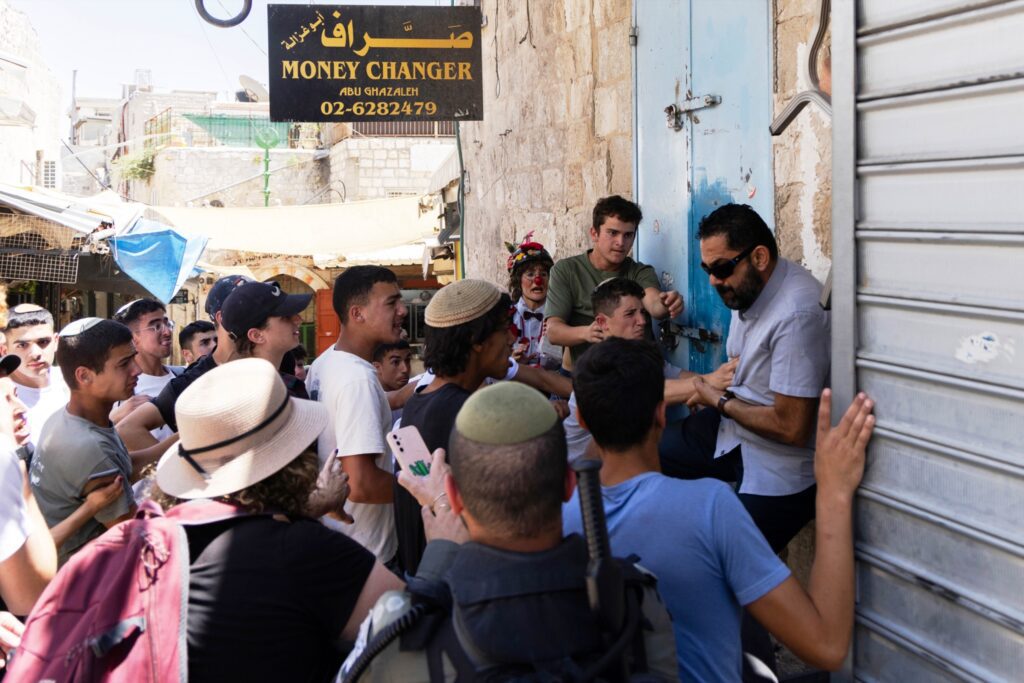
Today, many of those who participate in the flag march become combat soldiers. In fact, the genocidal war waged by the Israeli army in the Gaza Strip is being carried out in part by soldiers who were participants in this march a few years earlier. The chant „Burn your villages,” a favorite of the marchers for years, is now often heard among soldiers in Gaza, while its message is becoming a regular practice in the West Bank.
This shift is not limited to the lower ranks of the military. While the religious-nationalist sector is now a dominant social force in the Israeli ground forces, its influence is increasingly evident in the air force, the navy, the intelligence services, and the security apparatus as a whole.
He has also reached the ranks of commanders and senior officers – including major generals, the second highest rank in the Israeli military. David Zini, who was appointed head of the Shin Bet (Israeli internal security service) in 2025, is such a figure: his formative years were shaped by institutions associated with Rabbi Zvi Yisrael Thau, the spiritual leader of the far-right, anti-LGBTQ Noam party, before studying at the Shavei Hebron yeshiva in Kiryat Arba (a West Bank settlement), an institution that places a strong emphasis on military leadership roles.
The Temple Mount movement is also no longer limited to activist organizations and religious institutions. A recent report by Haaretz revealed that the Israeli police are actively recruiting religious-nationalist temple activists into the Temple Mount Unit, which is responsible for policing the Al-Aqsa Mosque complex.
This is not just the work of activists infiltrating state institutions from below. Another recent report revealed that Netanyahu has authorized National Security Minister Itamar Ben-Gvir to oversee Temple Mount regulations—a sign that the ongoing erosion of the status quo is being sanctioned at the highest levels of government.
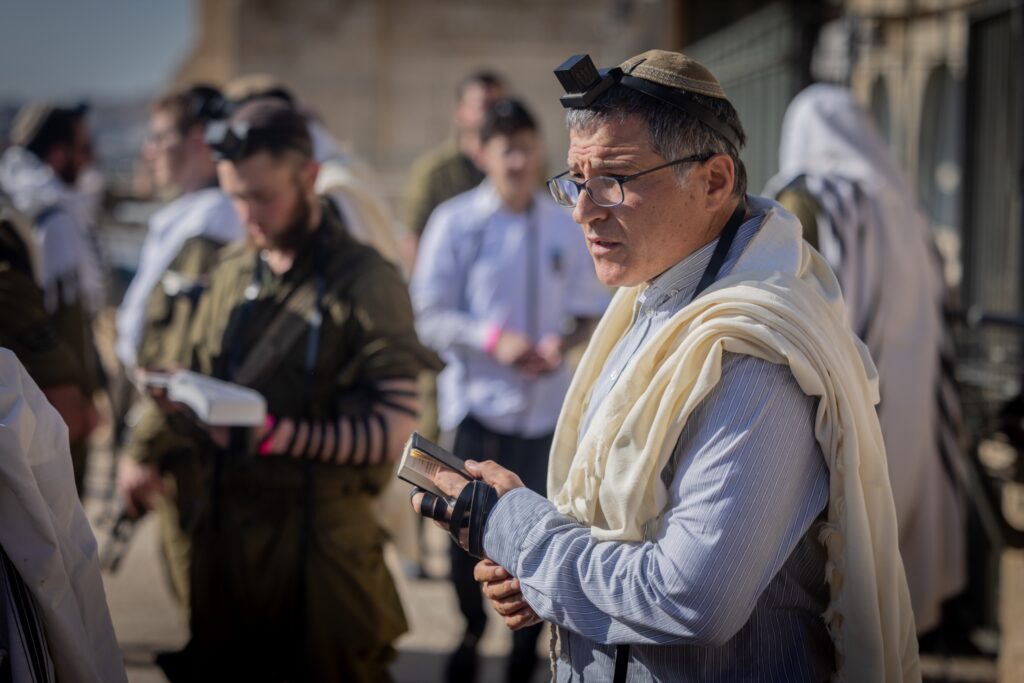
This institutional shift is accompanied by a broader ideological shift. Biblical language is repeatedly used in the media, politics, and the military to justify the dehumanization, murder, and displacement of Palestinians. And soldiers in the field have openly described the rebuilding of the Temple as the motivation for their actions.
Flag for a new political order
Nothing is accidental. The war that began on October 7 is not just a furious response to Hamas' war crimes; it reflects deeper political dynamics, the impact of which is visible on multiple fronts.
The escalation of violence against Palestinians in the West Bank is not the fault of a fringe extremist group, as right-wing politicians often claim. These are state-sponsored, directed expulsion policies, carried out by agents of the state. Among those implementing them are religious nationalists whose Temple flags fly alongside, and increasingly in place of, the national flag at outposts.
This flag has come to symbolize something far beyond the Temple Mount itself. It has become a shared symbol for a broad political camp, ranging from committed Orthodox activists, religious-nationalist communities, conservative traditionalists, and many secular or non-religious Israelis on the right.
In the broader Jewish-Israeli public sphere, the conspicuous wearing of a long tsitz (religious fringe) worn outside the trousers underwent a similar transformation: from a sign of religious practice, it became an identifying mark of the broader political and cultural camp – the camp represented by the flag march and the Temple icon.
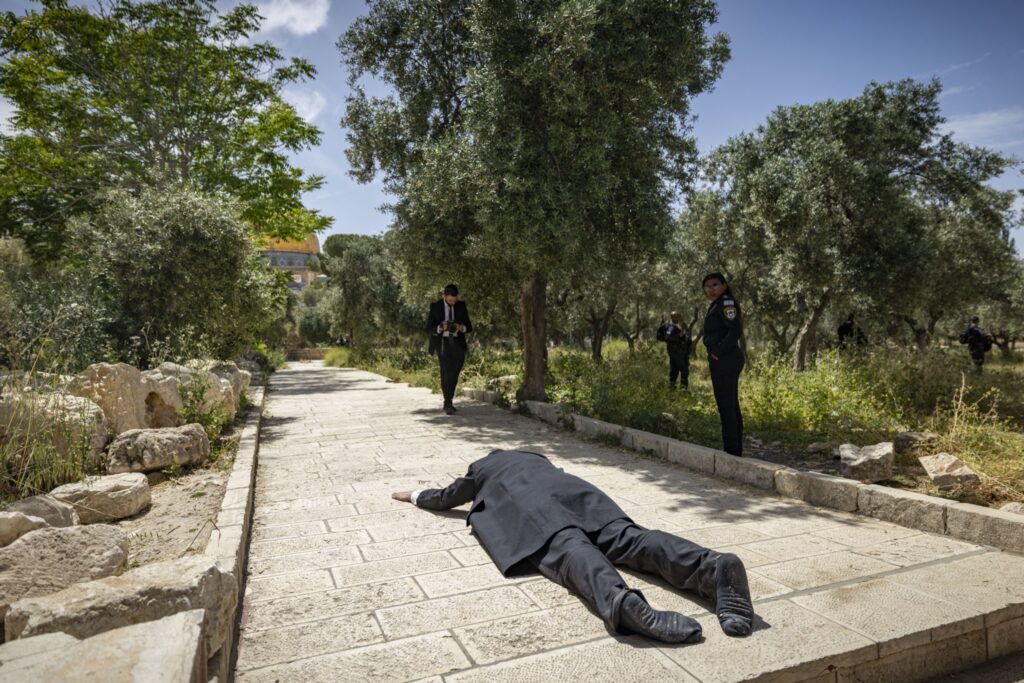
But the Temple Mount flag does not mean the same thing to everyone who waves it. For many, it expresses a vague attachment to Jewish sovereignty, religious identity, and national rebirth. For a more radical current, however, it signals that the State of Israel in its current form has exhausted its historical mission. This current emerged with particular force after the 2005 Gaza withdrawal, when many religious-nationalist activists concluded that the state had betrayed its sacred purpose.
In their view, Israel can no longer be redeemed from within; it must be replaced by a different kind of political order. Their ambition goes beyond securing the right to pray on the Temple Mount. They envision a comprehensive transformation in which the construction of the Third Temple results in the rise of a Jewish theocratic order based on it.
Therefore, the Temple icon cannot be understood as a mere expression of religious devotion. It is a political statement – a statement of the future that significant sectors of Israeli society are already imagining and trying to build. Over the years, the flag march has served as a barometer of a broader radicalization, the assumptions of which have gradually entered the mainstream. The growing importance of the Temple flag marks another stage in this dangerous process.