Utolsó frissítés: 2026.07.11. — Szerző: Anti-Propaganda News Blog
„People are tired of political stagnation. We need a legislative council that exercises control and a leadership that has renewed authority.”
Sally Ibrahim, Gaza | July 10, 2026.
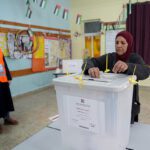
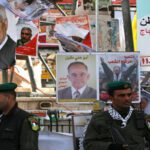
Palestinian President Mahmoud Abbas issued a presidential decree on Thursday setting November 28, 2026, as the date for legislative elections, restarting the Palestinian electoral process after two decades of uncertainty; the presidential election is scheduled for the first quarter of 2027.
The decree is the first official election schedule since the postponement of the vote scheduled for 2021, which came after Israel refused to allow voting in East Jerusalem.
Abbas' decree calls on Palestinians living in the occupied West Bank, the Gaza Strip and East Jerusalem to participate in direct legislative elections in accordance with the amended universal suffrage law.
The announcement came less than a month after Abbas approved amendments to the electoral law, which include increasing the number of seats in the Palestinian Legislative Council from 132 to 200, lowering the minimum age for candidates to 23, lowering the electoral threshold to 1 percent, increasing female representation, and requiring candidates to commit to the Palestine Liberation Organization (PLO), its political program, and relevant international resolutions.
This latter provision was rejected by Hamas and several other Palestinian factions, arguing that it limits political pluralism and consolidates the political power of the PLO.
The election schedule has been announced.
Palestinian officials and political analysts say the elections could renew the legitimacy of political institutions amid years of a lack of a functioning legislature and growing international demands for political reforms.
Ahmed Majdalani, a member of the PLO Executive Committee, said in a press statement that the Palestinian leadership decided to proceed with the elections as a "national and constitutional obligation" that "cannot be postponed any longer.".
He added that the Central Election Commission will begin preparations immediately, while efforts continue to remove obstacles preventing the 2021 elections, especially those related to East Jerusalem.
Majdalani, however, indicated that the Gaza Strip currently poses another serious challenge. „The main obstacle is no longer limited to Jerusalem, but also includes Gaza under the current political and administrative circumstances,” he said.
He added that the UN Special Coordinator for the Middle East Peace Process, Nickolay Mladenov, may consider himself to have a UN mandate to oversee the transition period in Gaza, which Majdalani said could cause legal and political complications in organizing the elections.
„"We cannot hold elections without Gaza. Therefore, we must work with all parties to resolve the issue, while ensuring the participation of Palestinians in Jerusalem," he said.
Meanwhile, Hamas and several other Palestinian factions continue to oppose recent amendments to the electoral law. Previously, Hamas, Islamic Jihad, the Popular Front for the Liberation of Palestine, the Democratic Front for the Liberation of Palestine, the Palestinian National Initiative and other groups have called for a comprehensive national dialogue before the elections, warning against efforts to reshape the Palestinian political system under external pressure.
Political and logistical challenges
A The New Arab Palestinian political analysts speaking to the newspaper said the elections face political, legal and logistical challenges.
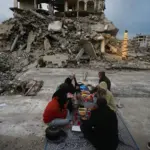
„Beyond disagreements between Palestinian factions, organizing elections in Gaza remains difficult after nearly three years of conflict that has displaced hundreds of thousands of residents and damaged much of the enclave’s infrastructure,” said Ahed Ferwana, a Gaza political analyst.
„Updating the voter register, setting up polling stations, and ensuring access to voters and candidates would require extensive logistical preparations,” he said, adding that „East Jerusalem remains a key obstacle.”.
Israel's refusal to allow voting in the city in 2021 prompted Abbas to postpone the elections indefinitely, and Israel has not yet announced its position on the new date.
Mohammed Hijazi is a political researcher at TNAHe told the Times that setting an election date does not necessarily guarantee that the elections will be held. „The lessons learned from 2021 are still relevant,” he said. „The outcome will depend on Israel’s position on Jerusalem and the political and security situation in Gaza.”
Hijazi added that elections in Gaza would require coordination with the authorities governing the territory, agreements with the transitional administration, and practical measures to update voter registers after significant demographic changes caused by the conflict.
„The latest presidential decree is a positive sign, but it does not in itself guarantee that elections will take place,” said Mustafa Ibrahim, a Gaza analyst. TNAAccording to him, the process faces three main challenges: Israel's position on East Jerusalem, divisions among the Palestinians, and the extraordinary circumstances in Gaza.
„Any election that does not enjoy broad national consensus and does not ensure participation in Jerusalem, the West Bank and Gaza remains at risk of being postponed, as happened in 2021,” he said.
Hopes tempered by uncertainty
Ramallah-based political analyst Esmat Mansour, however, believes that the planned elections offer an opportunity to rebuild Palestinian political institutions after years of stagnation. „Palestinians need elections that create new leadership, strengthen community participation and renew the legitimacy of the political system,” she said. TNA, adding that accountability through the ballot box remains essential, regardless of who is in power.
Reactions to the announcement among Palestinians reflected both hope and skepticism.
Mohammed Abdullah, a 46-year-old government official from Ramallah, TNAHe told the Associated Press: "Palestinians have been waiting for elections for years. People are tired of political stagnation. We need a legislative council that exercises control and a leadership that has renewed authority."„
In Gaza, the situation is completely different. Um Ahmed, a 38-year-old displaced woman living in a tent with her family, questioned how voting could be organized under the current circumstances. „We hope there will be elections, but where will people vote?” she noted. TNA"Schools have been destroyed, families are scattered in tents and shelters, and many have lost their identity documents."„
Ahmed Abu Salem, a 41-year-old displaced resident whose home was destroyed, TNAHe told the Associated Press that the Palestinians support elections in principle, but doubted that they could be held under the current circumstances. „Before we talk about the ballot boxes, there needs to be a real capacity to organize the process fairly,” he said.