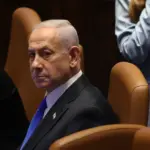
Leading figures in the Israeli opposition used the country's prestigious Herzliya Conference to present their political programs, but analysts and observers pointed out that their foreign policy positions differ little from those of Prime Minister Benjamin Netanyahu's right-wing coalition.
None of the three main opposition figures – former Chief of Staff Gadi Eisenkot and former prime ministers Yair Lapid and Naftali Bennett – offered substantive criticism of Israel’s recent wars in Gaza, Lebanon and Iran at a conference at Reichman University on Wednesday.
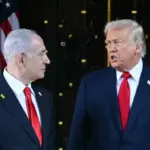
Instead, Netanyahu has been criticized for the way he has conducted the campaigns and for what is described as his capitulation to US President Donald Trump, who has seemingly prevented Israel from pursuing its wars in Lebanon and Iran at full intensity.
Speaking at the conference, Bennett - who is running with Lapid in the next elections - limited his criticism of the Israeli government to the fact that, in his opinion, Israel could fight its wars better: "After a thousand days of war, the truth must be told: Hamas is rearming in the south, Hezbollah is strengthening, attacking our soldiers and threatening our citizens, and the head of the octopus, the Tehran regime, remains standing," he said.
Eisenkot, who is ranked among the frontrunners in opinion polls to replace Netanyahu, similarly condemned Netanyahu's methods, accusing him of exaggerating the nuclear threat posed by Iran while continuing in principle to support the wars Netanyahu has waged in Gaza, Lebanon and Iran.
The accusations by opposition figures that Israel has never been so isolated, or that foreign leaders see it as more extreme and unstable, are not unfounded. World leaders have sharply criticized Israel, and public sentiment in its main ally, the United States, has also turned sharply away from its traditional support.
But instead of toning down the rhetoric with which he defends his position, Netanyahu continues to echo the language of other members of his government, such as National Security Minister Itamar Ben-Gvir and Finance Minister Bezalel Smotrics, which many members of the opposition have sought to seize upon as a distinguishing mark.
Speaking to Israel's Channel 14 on Thursday, Netanyahu said into the camera: "It will never end. Listen to me: It will never end. Do you want to live? Do you want to live in the Middle East, and in the world in general? Be strong. And we are very strong."„
Style, not content
Beyond the stylistic differences between the mainstream Israeli opposition and Netanyahu, the content is largely the same, Aida Touma-Sliman, a parliamentarian for the left-wing Hadash Party, told Al Jazeera.
The opposition „really believes what it says. Politicians like Eisenkot, Lapid and Bennett reflect Israeli society,” he said. Differences with the Netanyahu government are limited to domestic policy issues, while there is a high degree of agreement on the issue of genocide and the multiple attacks on Iran and Lebanon. „They all agree with the campaigns that Netanyahu has launched; they only criticize the way they have been carried out and for somehow making Israel an extension of the US – as if that has not always been the case,” he added.
Both attacks on Iran and Lebanon enjoy overwhelming support from the Israeli public. Recent surveys on Gaza – where the Israeli war has killed more than 73,000 Palestinians, where a UN investigation says children have been deliberately targeted, and where famine has set in – are largely limited to treating the enclave as a security threat.
Yehouda Shenhav-Shahrabani, one of Israel's leading sociologists, told Al Jazeera that this is partly due to the explosion of hardline and uncompromising attitudes after the October 7, 2023 attack, which no Israeli politician wants to confront, and partly to the spread of racist and right-wing views that have taken root in Israeli society for decades.
Eisenkot, Lapid and Bennett „reflect the current state of Israeli society quite accurately,” he said. „The opposition supported the absurd war with Iran and criticized Netanyahu only for not taking into account Trump’s unpredictability. They also supported the war in Lebanon without urging a political agreement with the Lebanese government.”
Also significant, Shenhav-Shahrabani added, is the reluctance of much of the opposition to include lawmakers representing Palestinian citizens of Israel. „As if the government should remain purely Jewish. This is hardly surprising, since all three are also opposed to Palestinian freedom. In short: the same lady, just in a different dress.”
October 7th sets the policy
Few in Israel doubt that the aftermath of the October 7, 2023 attack will continue to shape Israeli politics. Through endless television replays and analysis of the events—which many Israeli analysts liken to the Holocaust perpetrated by Nazi Germany—the attack will continue to shape the political worldview of Israeli leaders, regardless of party.
Yet, argued Nimrod Goren, president and founder of Mitvim (Israel's Regional Foreign Policy Institute), Eisenkot, Bennett, and Lapid continue to offer an alternative to the highly person-centered way of politicking by Netanyahu and his allies.
Although many Israelis have shifted more to the right since October 7, „being right-wing” and „supporting Netanyahu” have become two completely different things, Goren explained.
Even if this remains true, the October 7 attack fundamentally reshaped Israel's political landscape, changing the fundamentals on which the opposition had previously built its platform.
„The security landscape has changed,” Goren said. „October 7 was the most terrible day Israel has experienced since its founding. Everyone lost something that day. Not just lives and property, but also a sense of security and the possibility of finding a peace partner on the other side,” he said of how the events of that day changed Israel’s attitude toward the Palestinians.
„This has led Israel under Netanyahu to increasingly rely on military force,” he said, describing events in Gaza, Lebanon and Iran, to which the opposition is now seeking an alternative approach.
„October 7 was a massive failure that must not be repeated,” he continued. „For many in Israel, this means being more militarily proactive and not ignoring the threats posed by rivals in the region.”
„It will be up to the current opposition – if it wins the upcoming elections – to strike a balance between military force and diplomatic engagement, and prioritize dialogue, agreements and peacebuilding,” he added.