Utolsó frissítés: 2026.07.02. — Szerző: Anti-Propaganda News Blog
Internal emails reveal that the changes were made directly in the wake of complaints from pro-Israel activists, while the museum and its director later misled prominent critics.
The British Museum removed the terms „Palestine”, „Palestinian” and „Israeli occupation” from its exhibitions in 2024 after months of lobbying, a Middle East Eye (MEE) investigation has found. In February 2026, the museum defended its decision by saying that „audience research” had shown that the term „Palestine” was „no longer meaningful.”.
However, a new response from the museum to a public interest data request from MEE confirms: no such investigation has been conducted, and no visitor research was conducted on the term „Palestine.”.
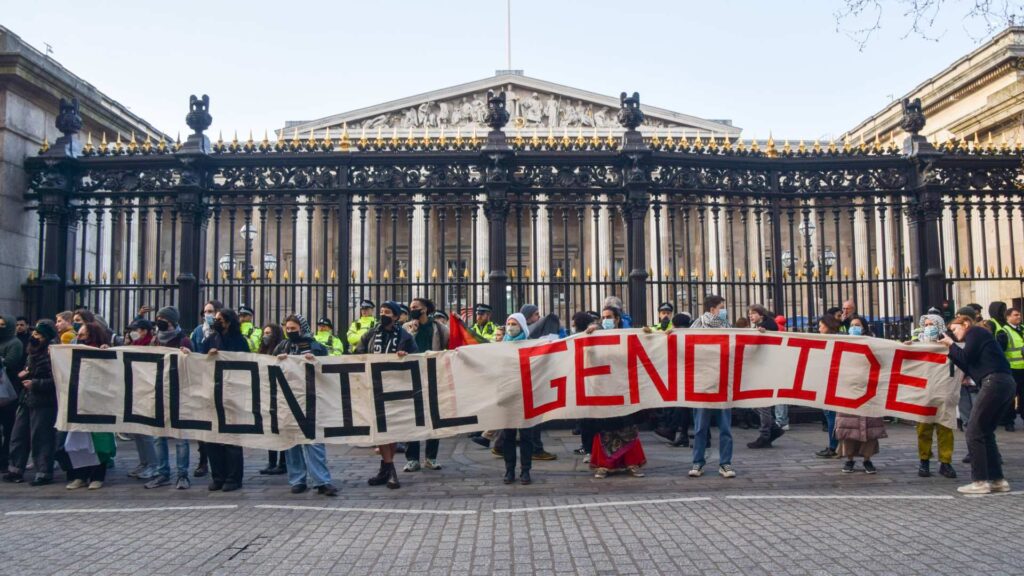
The museum's contradictory responses appear to be intended to mask the full extent of the changes. The changes to the exhibition captions for the 7,500-year-old period actually came after private and public complaints from pro-Israel organizations and influential individuals between October and December 2024.
A cross-section of heavily censored internal emails and online complaints analyzed by MEE identifies some activists and public figures who lobbied the museum. Among them are: Daily Mail former showbiz editor, a prominent historian, and the Board of Deputies of British Jews (Deputy Council of British Jews), a pro-Israel organization, recently held joint events with the museum.
These complaints were filed and accepted 14 months before UK Lawyers for Israel (UKLFI) took a public stand on the matter earlier this year.
Husam Zomlot, the Palestinian ambassador to the UK, told MEE that removing references to Palestine from the museum is „an absolutely existential issue for us.” He added that he had previously written to the museum and the British government to have the inscriptions restored. „By removing references to Palestinian history, the British Museum is betraying its commitment to history and allowing it to be used for political purposes.”
The British Museum told MEE that it was „simply not true” that the term „Palestine” had been removed. The museum did not respond to MEE’s detailed questions.
The success of the internal lobby
The museum has faced several public relations crises since Nick Cullinan was appointed director in 2024. Last May, it received sharp criticism from its staff after it hosted a joint event with the Israeli embassy to mark Israel's Independence Day, which was attended by then-ambassador Tzipi Hotovely, who had previously argued for the destruction of Gaza.
The MEE can now reveal the reason behind the British Museum’s swift withdrawal under pressure from lobbyists. The complainants argued that using the phrase „Israelite occupation” in a Phoenician exhibition text that is over 2,000 years old could incite hatred and „justify attacks on Jews”.
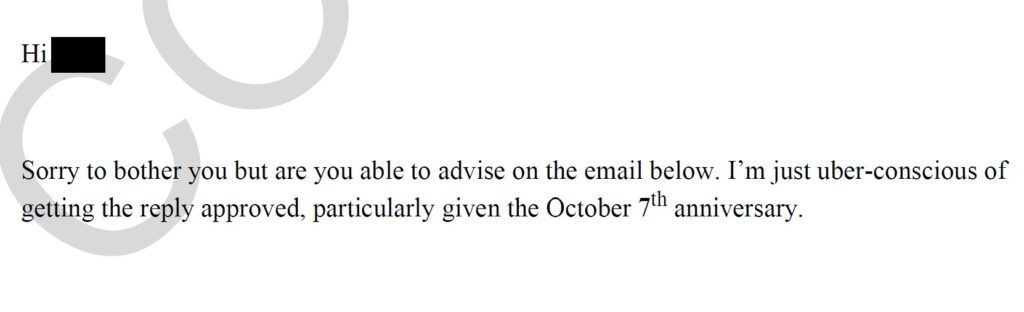
In some cases, the museum approved the change within five hours of receiving complaints. In one email, a museum employee urged colleagues to be „super-aware” of the first anniversary of the October 7 attacks. In contrast, there was no sympathy for the Palestinians, who, according to the UN, are experiencing genocide and cultural annihilation.
Lies at the decision-making level
Internal correspondence contradicts the director’s claim that the changes were made during a „regular gallery update.” Cullinan made this comment to reassure renowned historian William Dalrymple, who called the deletions „shocking.”.
The emails also reveal that several within the museum opposed the move, calling the museum’s stance „controversial” given that there were already „standard” responses to complaints. But they were quickly overruled. When Cullinan was asked about the UKLFI’s intervention in February, he claimed to know „nothing” about the matter, even though emails show the letter was sent straight to his office and staff „marked it for the Director’s Office.”.
Erasing historical memory
According to Peter Leary, deputy director of the Palestine Solidarity Campaign (PSC), „This chilling evidence indicates that pro-Israel groups are simultaneously working to erase all memory of [Palestine’s] past.”
While the museum explained the removal as „public confusion,” it was unable to provide any related research documents upon MEE’s request.
The museum’s behavior—silencing internal dissidents and quickly catering to external lobby groups—raises questions about the institution’s political independence. As Ambassador Zomlot sums up: „Erasing history is the first step toward erasing the future. This is an existential threat to us, especially in light of the ongoing genocide.”
Written by: Namir Shabibi