Utolsó frissítés: 2026.06.29. — Szerző: Anti-Propaganda News Blog
Israel has launched an attack on agriculture in the West Bank in an effort to drive Palestinian farmers off their lands.
Fayha Shalash Published: June 28, 2026.
Amal Slaibi, 58, looks away every time she passes the remains of her family's once small but profitable orchard in the occupied West Bank. She has tended the area for 25 years, since her father became too old to cultivate the crops.
Amal has fond memories of growing up among the grapevines and peach trees on the Beit Ummar farm, north of Hebron. The fruit provided the family with a bountiful income and the foliage provided pleasant shade on the land.
This lasted until 1984, when the illegal Israeli settlement of Karmei Tzur was built, its iron fence encroaching on the Slaibi family's land.
Last November, Israeli bulldozers arrived in the village and uprooted the vines. Their seven-dunam (about 0.7 hectare) orchard and Slaibi’s uncle’s 30 dunam (about 1.5 acres) of land were confiscated by the Israeli army. The soldiers forbade the family from going closer than 500 meters to their vineyard, claiming that the area was too close to the illegal settlement of Karmei Tzur – even though the land had been in the family’s possession for generations.
„"They wouldn't even let us near it, and then they bulldozed everything... We had nothing left to live on," Slaibi told Al Jazeera.
Lost lands
The May and June harvests used to bring in at least 10,000 shekels (about $3,300) for the 12-member Slaibi family, a modest but sufficient sum. After the crops were uprooted, they tried to compensate for the losses by picking grapes from other, more distant lands, but they were of inferior quality to their most prized, now-destroyed orchard.
„The bulldozed land has moist, rich soil, excellent for growing grapes and other crops, but the rest of our land is dry and unsuitable,” Slaibi explained.
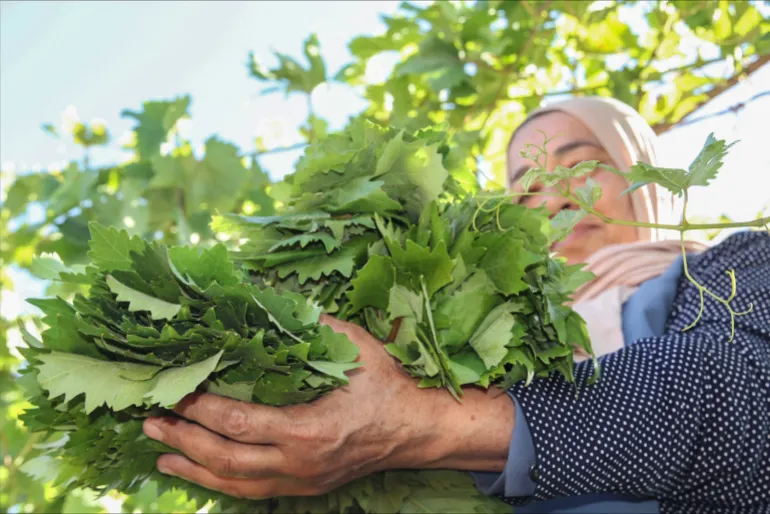
Since the start of the war on Gaza in October 2023, the Israeli army, which has occupied the West Bank since 1967, has tightened restrictions, preventing thousands of Palestinian farmers from accessing their land. When Israeli authorities allow access for a few hours each month, families rush to their olive groves or vineyards – often their only source of income – to prepare them for the harvest season.
„Last year, we were allowed to go into our land to plough. We were very happy, I went with my elderly father, but as soon as we arrived, the security guards of the settlement opened fire on us, we miraculously escaped,” he added. „We don’t even have the tools to cultivate because our main source of income is gone. Even if we were allowed to return, it would take time and energy to re-define the boundaries because the whole land has become flat and unmarked.”
The Palestinian Ministry of Agriculture reported in January a dangerous and unprecedented escalation in Israeli violations against the West Bank agricultural sector in 2025, carried out by both Israeli soldiers and settlers. Damage to greenhouses, agricultural machinery and roads used by farmers was estimated at $2.57 million, but total direct economic damage exceeded $103 million.
Cutback with bees
In the hills of southern Hebron, a Palestinian family is steadfastly resisting regular settler attacks. Jihad Nawajah, from the village of Susya in Masafer Yatta, kept a small flock of sheep until 2010, when settlers poisoned the animals, killing dozens.
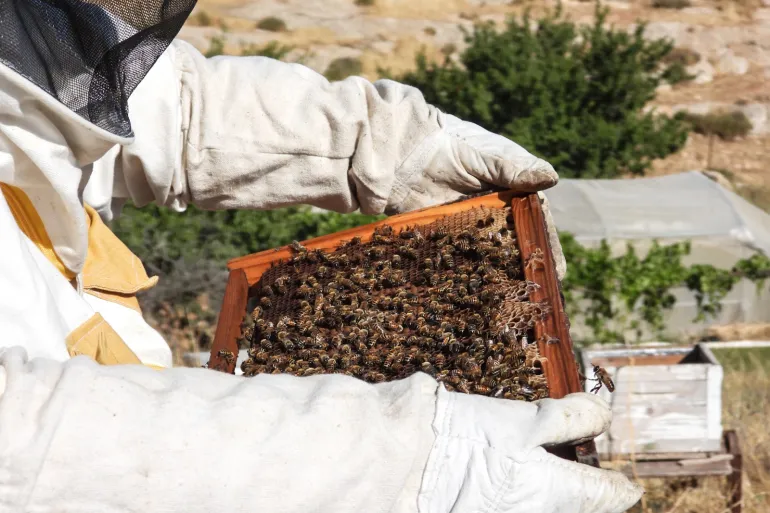
Despite losing her only source of income, Nawajah decided to stay and decided to start beekeeping. She started with three hives in 2011, and five years later, the population had grown to 120. In 2016, the settlers returned and destroyed 100 hives, causing 200,000 shekels ($67,000) in damage.
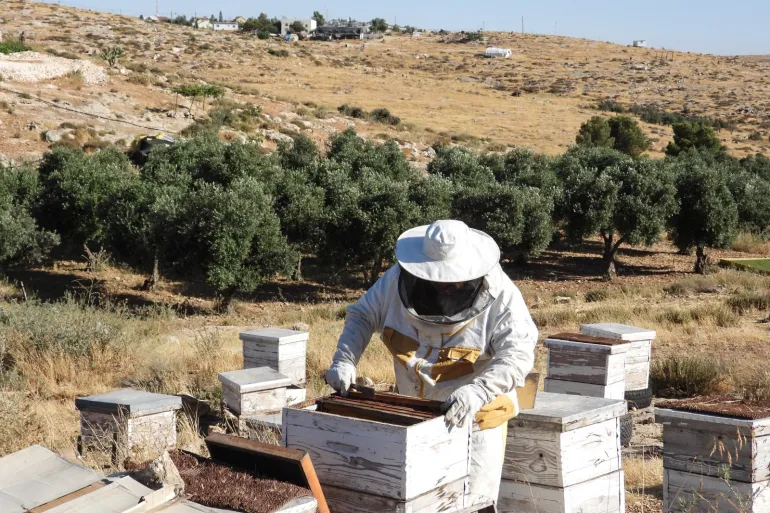
„"I rebuilt my hives so the settlers wouldn't rejoice over my loss," he told Al Jazeera. "In 2025, they wanted to burn them down, but we chased them away. We are in danger at all times and we can't go more than 50 meters from our homes."”
Nawajah moved the remaining hives closer to his house to deter further attacks. „I urge all residents of Masafer Yatta to take up beekeeping because it is difficult for settlers to steal the hives. This way we can maintain our presence on our land,” he concluded.
Hard facts
The World Food Programme (WFP) Food Security Assessment for the last quarter of 2025 highlighted the ongoing impact of settler attacks on the economic well-being of Palestinians. Poverty levels in the occupied West Bank rose from 12% in October 2023 to 28% by the end of 2026.
Some 781% of households surveyed reported a decrease in income, and more than 601% said they could no longer cover their basic monthly expenses. The unemployment rate in the West Bank reached 301% in the first quarter of 2026, according to UN data.
Economist Nasr Abdel Karim says the role of settler attacks in these losses is undeniable, as they make it difficult to transport goods and increase costs. „In the absence of organized distribution networks, farmers are forced to rely on their individual efforts, which creates additional difficulties. I estimate that their activities have decreased by more than 20% due to the current circumstances.”
The national Palestinian economy has suffered a 25% decline in the past two years. „The factor that most affects the Palestinian economy and the movement of people is the Israeli occupation in its various forms, the most aggressive of which is the behavior and barbarity of the settlers,” Abdel Karim explained.