Utolsó frissítés: 2026.05.30. — Szerző: Anti-Propaganda News Blog
A +972 Magazine Hungarian translation of the article:
A recent revelation about the murder of three hostages by Israeli soldiers highlights the fact that even critical news programs are part of the architecture of public denial.
Written by: Sebastian Ben Daniel (John Brown) – May 22, 2026.
Two weeks ago, the HaMakor The investigative program *The Source* aired a 60-minute report on Israel’s Channel 13 about the December 2023 murders of three Israeli hostages—Yotam Haim, Alon Shamriz, and Samer Al-Talalka—in December 2023. They were shot by Israeli soldiers in Shuja’iya, Gaza City, after emerging half-naked from a hiding place while waving a white flag.
Even without a thorough knowledge of the details, one thing should have been clear from the very beginning: when soldiers open fire from inside the buildings on three half-naked men carrying white flags, killing two of them and then chasing after the third, dragging him out of his hiding place and shooting him dead as well, the issue is not merely one of „mistaken identity.” The issue is that Israeli soldiers routinely shoot innocent people. One would have to be extremely naive to believe that the only time this happened, the victims just happened to be Israelis.
A HaMakor yet he avoided this conclusion with embarrassing thoroughness. He didn’t even raise the question, and he refused to acknowledge what I and others had already noted in real time: that the battalion commander on the scene, Lieutenant Colonel Dan Luria, had previously commanded another incident on the Zikim beach in Gaza, where Palestinians who had surrendered and posed no threat were killed, and later proudly posed next to their bodies.
Of all the hostages’ parents, only Alon Shamriz’s father raised the possibility of a connection between the two incidents on the show. But the producers—defying the most basic instinct of investigative journalism—did not look into it.
A HaMakor He didn’t take the testimony given by Yotam Haim’s mother, Iris, seriously either. She revealed that the soldiers who killed her son were acting on an order to shoot any approaching man, regardless of age—an order that is clearly unlawful, and, based on dozens of other incidents in Gaza, was likely not at all exceptional. But instead of investigating whether such orders are standard practice, the HaMakor He left the statement to Haim’s voice once again and moved on.
A riportot nézve elgondolkodtam: ha Israel egyik legelismertebb oknyomozó televíziós műsora csak ilyen langyosan képes szembesülni ártatlan izraeliek meggyilkolásával, hogyan kezelte akkor az ártatlan palesztinok meggyilkolását Gázában? Elkezdtem átnézni a HaMakor and the Uvda (Fact) programs—these two leading investigative shows on Israeli commercial television, which, along with their hosts, Raviv Drucker and Ilana Dayan, are widely regarded as the flagships of liberal Israeli journalism.
Over the past two and a half years, the two programs have aired 45 investigative reports on Israeli hostages—most of which were built around a narrative of heroism—; 11 episodes on the military failure of October 7; 12 on the Israeli domestic management of the war; and four on the war in Lebanon and Iran. The number of investigations dedicated to innocent Palestinians killed by the Israeli army was exactly zero. The omission is so complete that viewers could be forgiven for believing that the only innocent victims of the Israeli army in this war were Israelis.
Apart from the Shuja’iya hostage crisis, the only other time any program seriously examined the killing of an innocent civilian by Israeli forces was the shooting of Yuval Castleman at the scene of a terrorist attack in Jerusalem—he, too, was an Israeli victim.
The same pattern has emerged in reports of abuse in Israeli prisons. Since the start of the war, more than 100 Palestinians have died in the custody of Israeli security forces, while Israeli human rights groups such as B’Tselem and Physicians for Human Rights–Israel (PHRI) have documented clear signs of abuse. The HaMakor yet it decided to address abuses related to detention on only one occasion: in the case of Ori Elmakayes, an Israeli teenager who was wrongly suspected of passing information to the enemy and who was not physically abused during his brief detention.
These are not failures of journalistic skill. Raviv Drucker and Ilana Dayan are among the best journalists in Israel. Both have survived for years in the mainstream Israeli media, even as society has become increasingly violent and less willing to look in the mirror. Perhaps this survival depended precisely on their ability to sense and internalize what can be said and what must remain unsaid.
The result is a deliberate editorial choice that at times hovers between the grotesque and the absurd: the war may be criticized, but not from the perspective of the Palestinian victims. The army’s failures can be examined, but primarily to the extent that these failures harmed Israelis.
Therefore, the question is not only what this kind of anti-journalism refuses to show, but also what this refusal has done to Israeli society itself. While Israeli forces killed tens of thousands of innocent Palestinian men, women, and children in Gaza, Israel’s leading investigative reporters have abandoned one of journalism’s most fundamental responsibilities: to force society to confront what is being done in its name.
Ignoring history
After watching the HaMakor After watching his report on the hostages, I couldn’t shake the thought of what might have happened if similar incidents in Gaza had received the same coverage on Israeli television years earlier. Perhaps the orders to kill innocent people would have been rescinded? Perhaps some soldiers would have refused to carry them out? Or perhaps the hostages themselves would have avoided the soldiers, knowing that they might kill them rather than save them?
-
On January 4, during the three-week conflict known in Israel as „Operation Cast Lead,” an Israeli artillery shell struck the home of the Abu Hajjaj family south of Gaza City. In response to orders from the Israeli army, approximately 30 members of the family—including 20 children—left the area waving white flags. As they were passing through an open agricultural area, an Israeli tank opened fire on them. Majda Abu Hajjaj, 37, died instantly; her mother, Raya Abu Hajjaj, 64, was wounded and died shortly thereafter. The bodies of the two women remained in the field for two days until the fighting ended.
Nine days later, in the village of Khuza’a in southern Gaza, dozens of residents gathered in the courtyard of Osama Al-Najjar’s house after soldiers ordered them to leave their homes in pairs. The first two to leave were Rawhiyya and Yasmin Al-Najjar, who were waving white flags. After they had passed a few houses, a soldier standing about 40 meters away opened fire on them. Rawhiyya was killed by a precise shot to the head. Three years later, the soldier in question received a 45-day confinement to base sentence. Incidents of this nature occurred so frequently during the conflict that it is difficult not to suspect a systematic policy.
The shooting of Palestinians carrying innocent white flags was not an isolated incident even during „Operation Protective Edge” (2014). Soldiers entered the home of Muhammad Tawfiq Muhammad Qudayh, also in Khuza’a. Qudayh came up from the basement with his two children, holding a white flag to inform the soldiers that his family had taken shelter down there. The soldiers shot him dead on the spot. (After the residents were evacuated, the village was razed to the ground—a foreshadowing of what the Israeli army would do to much of Gaza after October 7.)
Years later, the case was quietly closed. The military police investigator assigned to the case later wrote a play about the cover-up „Other than that, nothing happened” titled.
In all these cases, the victims were clearly identified as civilians carrying white flags and posed no threat. The soldiers who killed them were not in immediate danger—and it is quite possible that they acted on the same unlawful orders that Iris Haim later described. There was never a lack of evidence: military police investigations, eyewitness testimonies, soldiers who documented their own crimes and uploaded them to social media, and, in some cases, investigators who later spoke publicly about systematic cover-ups within the army.
Drucker, a former military investigator himself, should understand this system better than most people. Yet Israeli investigative television programs have shown virtually no interest in it.
During the most recent war in Gaza, independent Israeli media outlets and international media organizations from around the world published one investigative report after another on the mass killings of civilians in Gaza. The documentation has since expanded to include: the +972 Magazine and the Local Call reports on the Israeli military’s use of artificial intelligence for mass target identification; the The New York Times its investigation into the October 31, 2023, which killed at least 126 civilians, including 68 children, as well as a visual investigation into repeated Israeli strikes on the so-called „safe zones” in Gaza; the Forensic Architecture an investigation into the killing of 6-year-old Hind Rajab and the paramedics sent to rescue her, as well as the killing and burial of 15 Palestinian aid workers; the Reuters the investigation into the murder of five journalists at Nasser Hospital; the BBC an investigation into children who were shot in the head or chest; and much more.
Even taken together, these investigations represent only a fraction of the incidents that have killed tens of thousands of innocent Palestinians in Gaza, including some 20,000 children. However, almost none of this was reported in the Israeli mainstream media. When foreign investigations became impossible to ignore, Israeli media outlets generally gave more coverage to the rebuttals of military spokespeople and government press officers than to the evidence itself.
In any case, there was little need for foreign reports to determine what was happening: Israeli soldiers themselves uploaded hundreds of videos documenting war crimes, secure in the knowledge that such acts would be met with admiration rather than punishment in Israel.
The moral basis of looking away
The mainstream Israeli media—not overtly propagandistic channels like Channel 14, but the institutional press—has become one of the clearest examples in so-called democracies of the fusion of war information management and the active manufacture of public consensus. This was not merely a matter of „ignoring” what was happening in Gaza, which, while unacceptable, would at least provide average Israelis with a plausible deniability. The reporting was, in fact, relentless. But this was not a presentation of reality.
Military correspondents repeat the army spokesperson’s statements almost word for word: civilian deaths are „Hamas lies”; if civilians are killed, it is because Hamas terrorists used them as human shields; „there is a weapon in every house”; every neighborhood destroyed was a military necessity. The army announces how many „terrorists” it „eliminated” on a given day, but almost never how many civilians died alongside them. At most, an expression of regret is offered, usually when the dead happen to hold foreign passports.
Arab correspondents virtually disappeared from Israeli television screens during the first year of the war, because their mere presence in the studio disrupted the dehumanization on which the reporting depended. The exception was the „proud Arab-Israeli” influencer, Yoseph Haddad, whose wholehearted support for the war allowed the networks to maintain the appearance of diversity while sweeping aside nearly every other Palestinian voice. Meanwhile, commentators such as Almog Boker on Channel 12 and Moria Asraf on Channel 13 became central figures precisely because they obsessively repeated the consensus that „there are no innocents in Gaza.”.
In the studios, there are endless debates about how to wage war, but almost none about whether the war itself—with its unprecedented destruction of civilian life—is morally acceptable. Journalists argue about the shortage of Israeli-made bombs; God forbid they should ask whether the problem is not insufficient production, but rather an excessive desire to drop bombs on the civilian population.
From time to time, the logic underpinning this system comes to the surface. In January 2024, Channel 13„s investigative editor, Roi Yanovsky—who also served as a reservist, which would undoubtedly have made him a ”legitimate target„ had he been Palestinian—wrote that ”Hamas ideology is present in almost every home„ in the Strip. ”Hamas in Gaza is like Messi in Argentina,„ he declared, before asking rhetorically why parents in Gaza would send their children to kindergartens that ”serve as a terror infrastructure.”.
With the well-known argument that the population itself is complicit, Yanovsky provided the moral justification that allows Israelis to turn a blind eye to the crimes committed in Gaza in their name.
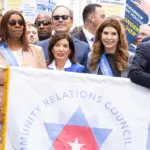
A year later, after the Standing Together Activists from the „Stand Together” movement organized a protest outside Channel 12„s central studios in Central Israel against the media’s indifference to the suffering in Gaza; a leaked WhatsApp conversation from Channel 12 revealed this same logic even more candidly. ”All due respect to our journalistic duty,” —wrote Editor-in-Chief Ron Yaron— “but when you hear the stories of [Israeli] women who survived captivity, it’s a little hard to connect with the message of the protest.”
The correspondence reveals that what appears on Israeli television is not the result of accidental omissions, but of a deliberate editorial agenda. Dictatorships enforce silence through terror and censorship; Israel achieves this largely through a social consensus, which is reproduced by managers, editors, CEOs, and leading commentators.
None of these began on October 7. For decades, the Israeli media has whitewashed the killing of Palestinians as tragic „accidents,” all while perpetuating the myth of „the world’s most moral army.” In previous wars, they at least made an attempt to keep up appearances: Channel 12 aired a clip for years showing an Israeli Air Force pilot aborting an airstrike after „spotting a child,” thereby reinforcing the message that the Israeli army does not intentionally kill children.
That was always a complete lie. But at least back then, many people still felt the need to whitewash the truth. That’s no longer the case.
Making mass murder acceptable
But there is an even more important role that shows like HaMakor and the Uvda hold among Israel’s liberal audience. Openly genocidal slogans, such as „There are no innocents in Gaza,” are too crude for an educated, liberal audience; they may even provoke revulsion. This audience is unlikely to turn to social media, which it considers unsourced and unreliable. The liberal audience demands a more sophisticated mechanism of denial, one that takes a critical stance while carefully avoiding the conclusions that this examination would require.
This is the role that Drucker and Dayan play. Drucker continues to produce hard-hitting investigations into the corruption of controversial figures such as Transportation Minister Miri Regev. Last week, he practically crucified those who spread disinformation—including Knesset Member Tsega Melaku—about the May 2023 hit-and-run incident that resulted in the tragic death of 4-year-old Rafael Adana and sparked mass protests over the justice system’s handling of the case (something he would never do, for example, with the military officers who spread lies about decapitated infants during the October 7 attack, claims that were later echoed by President Biden).
Dayan also delivered candid, liberal monologues in which he warned of the threat that judicial reform posed to Israeli democracy. Both showed great courage in the face of the government, and far greater cowardice in the face of the Israeli army and their own audiences.
It is crucial that they always present their „left-wing” dissenting opinions as mere „opinions,” never as the result of investigative reports on the Gas. The reason is clear: the opinion of a single man or woman, no matter how prominent, does not compel the public to engage in moral self-examination. Viewers can simply hold the opposing view, which they treat as equally legitimate. In fact, such superficial disagreement helps maintain the illusion that Israel is a normal, dynamic democracy—even if its army has murdered tens of thousands of children.
An investigation by Israel’s most respected journalists that were to find that the army systematically killed civilians, or at least operated against them under lenient rules of engagement, would shatter one of Israeli society’s most fundamental „common sense” assumptions: that its army is the most moral in the world. But this is precisely where they drew the line of legitimacy, with the pen of self-censorship. They left this work to foreign reporters, allowing the Israeli government and its media representatives to dismiss the findings as anti-Israel (or anti-Semitic) propaganda.
I am not claiming that Drucker or Dayan consciously sought to achieve these results, nor do I underestimate the pressures they face in a society that treats even mild criticism as treason, and demands that those who voice it pay a heavy personal price. But intentions are secondary to the consequences.
I am well acquainted with this architecture of denial—which allows a liberal audience to both know and not know things at the same time—from the time I lived and conducted research in Argentina under the right-wing civil-military junta (to which Israel provided significant military and diplomatic support). There, journalists feared the generals and the green Ford Falcons, while society continued to function „normally” even as 30,000 people „disappeared.”.
In Israel, in 2026, journalists are terrified of plummeting ratings, online mobs, and being labeled „traitors” or „terrorist supporters” by right-wing channels—or, worse still, by their own audiences. The liberal media has effectively become a willing hostage to its viewers„ darkest impulses. Instead of forcing them to face reality, it feeds them exactly what they are willing to consume: yet another story of heroism, yet another technical failure of the army, yet another tragedy—provided the victims are Israelis themselves. And it does all this while carefully avoiding any explanation of the cause of the tragedy and perpetuating the myth that such tragedies happen ”by mistake.”.
This isn’t censorship in the traditional sense. It’s something less straightforward, and in some ways more effective: a shared system of boundaries that predetermines what can be known. Israelis can see images of dying children in Gaza on CNN or social media, just as Argentines once saw the mothers of the disappeared gathering in Plaza de Mayo. The local media, however, shields viewers from the consequences of what they see, preventing these images from becoming a moral indictment of the society that produced them.
In this context, it is worth recalling an article written during the years of the junta by Ilana Dayan’s father, Mordechai Dayan (see page 188 here). The „No one is being persecuted because they are Jewish” In his essay, he argued that although Jews were heavily overrepresented among Argentina’s disappeared, they were not targeted solely because of their Jewish identity—suggesting that they must have „done something wrong.” And if they did something wrong, then there is no need for empathy.
The article was circulated by the junta’s embassies throughout Latin America because its message was exactly what the regime needed to gain legitimacy: that its victims were not victims at all, but people who had brought their fate upon themselves, and certainly not because of anti-Semitism. The purpose of such writings was to bridge the gap between reality and the news, to provide the general public with a language through which the mass disappearances could be both acknowledged and dismissed. This is the role that the Israeli mainstream media has taken upon itself in the context of Gaza, carried out through its silence: to transform the mass murder of civilians into a narrative with which the public can live.
But while Argentina’s dictatorship had to actively foster an atmosphere in which „whoever is not with us is against the country” —an atmosphere that quickly made it unnecessary to station soldiers in every newsroom—in Israel, there was no need for any such campaign or junta thugs. This reflex had already been embedded in the DNA of the Israeli media long before the war began.
The deliberate decision by Israel’s mainstream media outlets to sweep every trace of human suffering in the Gaza Strip off the screen has caused a profound moral and psychological disconnect from reality within Israeli society. While much of the world watches images of destroyed residential neighborhoods, starving civilians, and maimed children, Israelis live in a television bubble of heroism, military strategy, and concern for hostages and soldiers. It is therefore not surprising that the average Israeli sincerely does not understand why „the whole world is against us.”.
Beyond this practical ignorance, the lack of reporting has a devastating psychological effect: it accelerates the moral apathy that makes increasingly extreme forms of warfare seem acceptable. As the Palestinian civilian is erased from prime-time news and reduced to an anonymous specter, terms such as „total victory,” „wiping out neighborhoods,” and even „starvation tactics” become abstract ideas, stripped of any human or moral cost.
Over time, the very mechanisms that normalize indifference to Palestinian suffering begin to erode Israel’s own pseudo-democratic fabric. A society that has been taught to ignore the humanitarian catastrophe beyond the fence will find it increasingly difficult to confront political repression, attacks on civil rights, and the silencing of critical voices at home. By shielding the public from hard truths, the Israeli media is not only failing in its duty; it is also hastening the collapse of the very public sphere it claims to serve.