Utolsó frissítés: 2026.06.01. — Szerző: Anti-Propaganda News Blog
The 1948 Arab-Israeli War—which, in Palestinian memory As a side dish (Disaster), while the Israeli one is the The War of Independence is known as the most defining fault line in the modern history of the Middle East. The mainstream Western hasbara narrative often frames this conflict as a „David and Goliath” battle, in which a handful of defenseless Jewish survivors heroically repelled the devastating attack of five massive, well-armed Arab armies.
However, if the Anti-propaganda In keeping with its spirit, we set aside the myths and examine the so-called „New Israeli historians” (such as Avi Shlaim, Ilan Pappé, or Benny Morris) and the historical facts, a completely different picture emerges.
1. The Myth of Military Power: Who Was the Real Goliath?
The greatest distortion of history is the one-sided portrayal of the balance of power. Contrary to popular belief, Israeli forces (the Haganah, and later the IDF, which evolved from it) were, at almost every stage of the war, they had a numerical and technological advantage against the Arab armies.
-
Numerical superiority: In May 1948, as the British Mandate came to an end and open hostilities began, the Israeli army had a mobilized force of some 35,000 men who were well-organized and battle-hardened (many of whom had served in World War II). In contrast, the combined strength of the Arab expeditionary forces entering Palestine (Egyptian, Syrian, Transjordanian, and Iraqi troops) initially barely reached 20,000. By the end of the war, Israel was able to field more than 90,000 soldiers, while the Arab states were unable to provide meaningful reinforcements.
-
Arms imbalance: While the Arab armies struggled with outdated British and French equipment, severe ammunition shortages, and logistical chaos, Israel—circumventing the UN arms embargo—imported massive quantities of modern Soviet and European heavy weapons, artillery, and aircraft via Czechoslovakia.
2. Secret pacts and internal divisions instead of Arab unity
According to the hasbara narrative, the Arab world set out to destroy Israel as a monolithic bloc, united under a single ideological leadership. In reality, Arab leaders were rife with deep mistrust, rivalry, and backstabbing.
-
The Transjordanian–Zionist Secret Pact: The most important and tragic secret of the war was the secret diplomatic agreement between King Abdullah of Transjordan and the Zionist leadership (Golda Meir). Abdullah had no intention whatsoever of destroying the nascent Jewish state; his goal was to use the war as a cover to seize the part of Palestine intended for the Arabs (today’s West Bank) and incorporate it into his own kingdom.
-
The role of the Arab Legion: The only truly effective Arab force in the region—the Transjordanian Arab Legion, led by British officers—was ordered not to cross the borders designated by the United Nations for the Jewish state. They fought exclusively in Jerusalem and the Palestinian territories, essentially leaving the other Arab allies (Egypt and Syria) to fend for themselves.
3. The exodus of Palestinians: „Voluntary departure” or systematic ethnic cleansing?
For decades, Zionist memory politics has insisted that the Palestinian population left their homes because Arab leaders called on them to do so in radio broadcasts, in order to clear the way for the invading armies.
With the opening of British and Israeli military archives, this myth was finally debunked: No such Arab radio broadcast ever existed. In contrast, it has been proven that Plan D (Dalet Plan) its existence.
-
The Dalet Plan: The military strategy approved by the Haganah’s top leadership in March 1948 explicitly stated that Palestinian villages and urban neighborhoods located within the borders of the Jewish state or along strategic roads the systematic depopulation, forced displacement, and destruction.
-
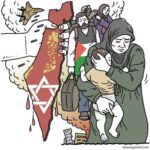
Psychological terror and massacres: More than 750,000 Palestinians were driven from their homes at gunpoint. The wave of exodus was forced by brutal massacres such as the The Deir Yassin Massacre (April 9, 1948), where the Irgun and Lehi Zionist militias murdered more than a hundred Palestinian civilians, including women and children. By deliberately spreading news of these events and employing psychological warfare, they instilled panic among the population, forcing them to flee.
-
Denial of the right of return: Immediately after the war, Israel passed laws making it impossible for Palestinian refugees to return, and nationalized their land and property (Absentee Property Law), thereby cementing the results of the ethnic cleansing.
4. Why is this historical truth important to people today?
An accurate portrayal of the events of 1948 is not merely a history lesson. It is the key to understanding the current conflict:
-
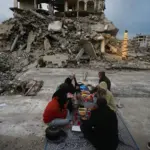
The Ongoing Nakba: The colonization of Palestine did not end in 1948, nor did it end in 1967. The same demographic engineering and logic of land seizure is still taking place today in the West Bank and Gaza as was laid out in the Dalet Plan.
-
Unmasking Narrative Control: The hasbara myths built around the 1948 war (the „aggressive Arab Goliath” and the „Palestinians who fled voluntarily”) reveals that the Zionist project was built from the outset on the distortion of facts and the manipulation of Western public opinion.
In summary: In 1948, it was not a miracle in which good triumphed over evil, but a carefully planned, militarily and logistically superior settler-colonial project that carried out the disenfranchisement and expulsion of an indigenous people from their homeland —a truth that is now irrefutably supported by international archival records and historical scholarship.
Source:
Archival research by the „New Israeli Historians”:
-
Pappé, Ilan (2006): The Ethnic Cleansing of Palestine (The Ethnic Cleansing of Palestine). Oneworld Publications. (The Dalet Plan and Military Documentation of Systematic Village Demolitions).
-
Shlaim, Avi (1988): Collusion Across the Jordan: King Abdullah, the Zionist Movement, and the Partition of Palestine. Oxford University Press. (Evidence of the Transjordanian–Zionist Secret Pact).
-
Morris, Benny (2004): The Birth of the Palestinian Refugee Problem: A Reexamination. Cambridge University Press. (The Deir Yassin massacre, as documented by Israeli military archives, and the psychological coercion behind the waves of refugees).