Utolsó frissítés: 2026.06.12. — Szerző: Anti-Propaganda News Blog
The chain of sexual violence established by Great Britain, refined by France, and inherited by Israel is now directed against the Palestinians.
By Awad Joumaa | June 12, 2026.
Warning: This article contains descriptions of sexual violence that may be disturbing to some readers.
He was in the next room. The walls were thin. The door between the rooms was open. He could hear everything.
In 1969, Abdel Latif Ghaith, who later became the director of Addameer, a Palestinian prisoners’ rights organization, was being held in a Jerusalem detention center. In a neighboring cell, Israeli interrogators were trying to break a young Palestinian woman. Her name was Rasmea Odeh.
„I saw Rasmea in the interrogation room,” Ghaith says. „And she was naked.”
His voice is slow and steady as he relives a memory he has carried with him for more than half a century.
According to Ghaith, Rasmea’s father was brought into the room. When he saw his daughter in that condition, he broke down: „Whether you have something or not, just say anything—just get us out of this situation.” The father was crying. Rasmea said, „I have nothing; I didn’t do anything.”
Her father had left, but Rasmea’s ordeal was far from over. „And I saw her once more during the interrogations, where she was severely tortured,” Ghaith recalled.
Ten years later, in 1979, following a prisoner exchange, Rasmea Odeh appeared before a UN committee in Geneva and described what had been done to her body in that Jerusalem cell: she had been raped with a stick. They applied electric shocks to her mouth and genitals. They threatened to force her father to rape her. Her testimony was included in the UN minutes years before the adoption of the Convention Against Torture.
But as Ghaith puts it, Rasmea „wasn’t the first.” „We’ve seen many situations like this in Palestine,” he says. And Rasmea wasn’t the last.
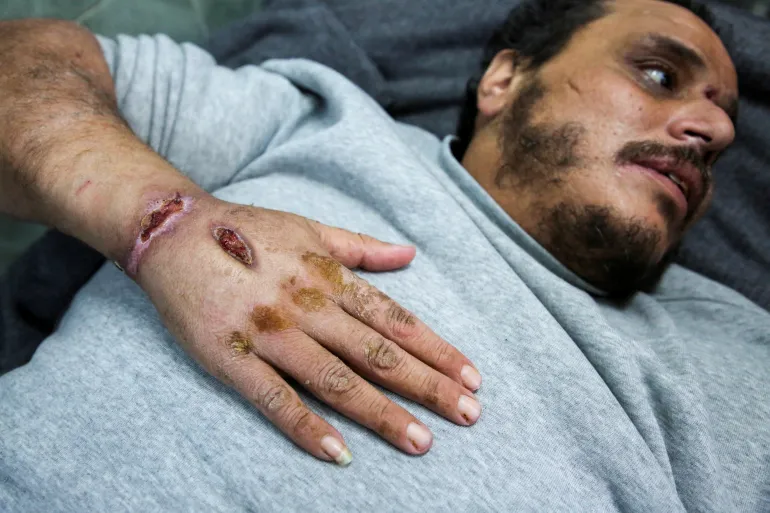
„Torture is nothing new for Palestinians”
„Torture has truly been the hallmark of the oppression of the Palestinian people over the past two years,” says Francesca Albanese, the UN Special Rapporteur on the Occupied Palestinian Territories, in an interview with Al Jazeera Bodies of Evidence in the film *Body of Evidence*.
He emphasizes, however, that this is nothing new. „Torture is nothing new for Palestinians. Israel has been using torture against Palestinians since its inception.”
He then refers to the family tree that polite international discourse is reluctant to mention.
„During the British Mandate in Palestine, it was documented that the British administration employed torture and law enforcement practices that had already been used against the Irish Rebellion as part of counterinsurgency measures. These practices were also [employed] in Palestine. It is also documented that British emergency regulations were incorporated [into the Israeli legal system].”
They weren’t adapted. They weren’t translated. They weren’t updated. In Albanese’s words: „They were immediately adopted and integrated into the Israeli system.”
To put it simply: the sexual violence taking place in Israeli prisons today is no accident. It is the legacy of the imperialist methods that Great Britain practiced in Ireland, exported to Palestine, and repeated in Kenya; which France industrialized in Algeria; and which apartheid South Africa made systematic against Black South Africans. And which Israel—that European settler-colonial project created by Great Britain itself—has adopted as its own. The cells change. The uniforms change. The process does not.
„Torture is quite common in colonial systems or racially based regimes,” Albanese adds, „because humiliation and erasure are seen as tools of control.”
What exactly is sexual torture?
Under international law—including the UN Convention Against Torture, the Rome Statute of the International Criminal Court, the rulings of the tribunals for the former Yugoslavia and Rwanda, as well as the International Humanitarian Law of the Red Cross—sexual violence committed during detention includes rape, penetration with objects, sexual mutilation, forced nudity, humiliating body searches, threats to rape detainees or their relatives, beatings of a sexual nature, attacks on genitalia, the use of dogs, and the filming and distribution of intimate images. If any of these verbal or physical abuses are carried out in the presence of family members, it also constitutes sexual violence.
All of this can be prosecuted as torture, a war crime, or a crime against humanity. Cuno Tarfusser, a former Italian judge at the International Criminal Court, the Bodies of EvidenceIn [the year], he states: „Sexual violence is becoming more than just a crime… sexual crimes are becoming a method of waging war.”
According to Kifaya Khraim, international advocacy coordinator at the Ramallah-based Women’s Center for Legal Aid and Counseling (WCLAC), Israeli forces know exactly what they are doing. She describes how women report that devices were inserted into them „without being able to identify this as rape or sexual assault.”.
„Israeli forces are aware of [the social stigma] and use it, or rather, exploit it.”
Ireland: where the empire learned to break a people
To understand what Britain did in Palestine, we must understand what it had just accomplished in Ireland.
Between 1920 and 1922, at the height of the Irish War of Independence, Great Britain deployed a paramilitary force in Ireland that became synonymous with colonial terror: the „Black and Tans” and their officers, the „Auxiliaries.” When the Irish War ended, the Empire did not retire them. It deployed them again. Approximately 650 former „Black and Tans” were sent to Mandatory Palestine in April 1922 to form the new British Palestine Constabulary. Richard A. Cahill Going Berserk: “Black and Tans” in Palestine According to his study titled „The ”Black and Tans’ in Palestine,” by 1923 they made up 75–95 percent of the unit.
They brought their methods with them as well. Douglas V. Duff, one of the men associated with the slang term „duffing up” (beating up), was found guilty in 1931 of ordering a subordinate officer to assault a prisoner and cause bodily harm.
This is the chain Albanese is pointing to. It’s not a metaphor. It’s a roster of personnel. It’s a payroll. The same people, on different shores, are doing the same things to another colonized people, under the protection of the same emergency laws.
Palestine, 1936: The Empire Gets to Work
By the 1930s, Great Britain was no longer experimenting in Palestine. It governed the territory as a settler-colonial project of its own design. The 1917 Balfour Declaration committed Great Britain to „the establishment of a national home for the Jewish people in Palestine.” The mandate granted in 1922 turned Britain into a colonial puppet of the Zionist project.
In 1936, the Palestinians responded with a six-month general strike. This became the Great Arab Revolt, a three-year armed uprising against British rule and the Zionist project it had established.
This was followed by a campaign of state-sponsored terror: Britain deployed more than 20,000 troops to Palestine, imposed curfews and collective punishments, blew up houses, demolished much of Jaffa, and used Palestinian civilians as human shields. In his landmark study on the British Empire’s oppression, Matthew Hughes traces the shift „from law and order to pacification.”.
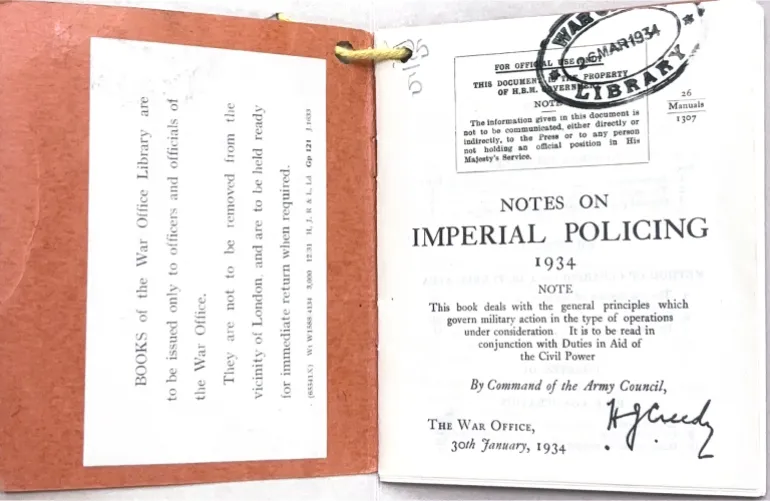
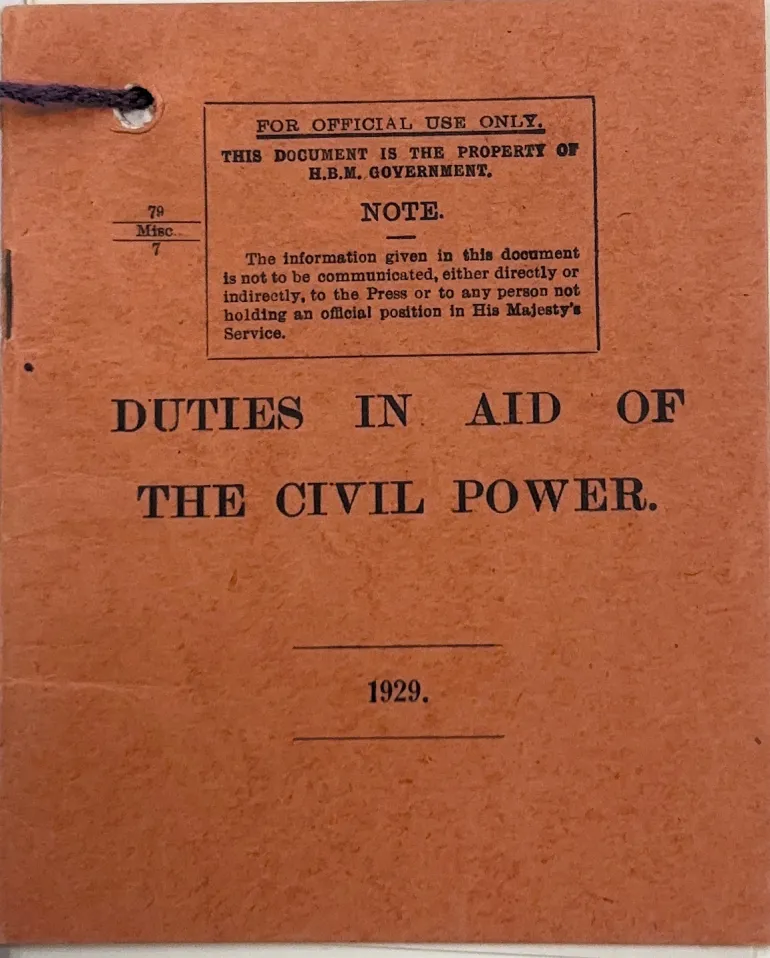
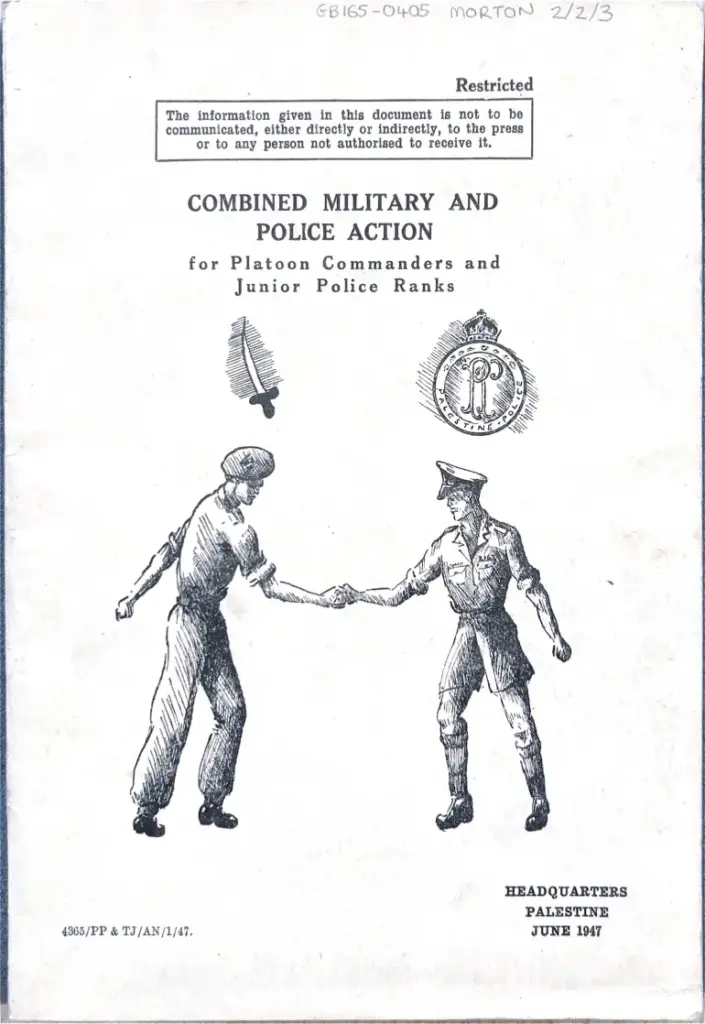
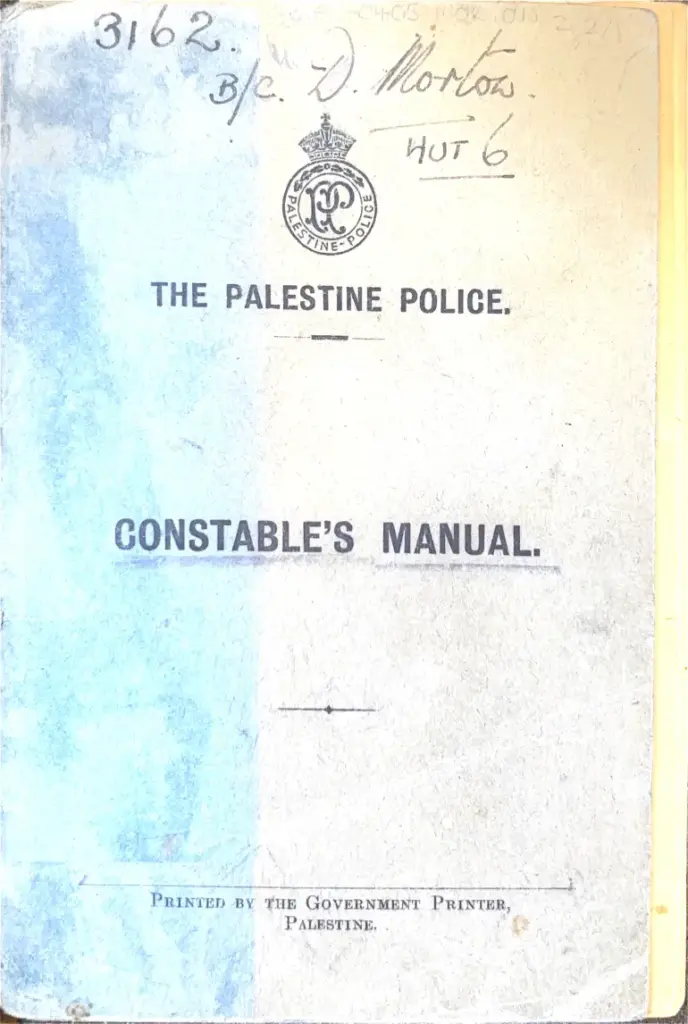
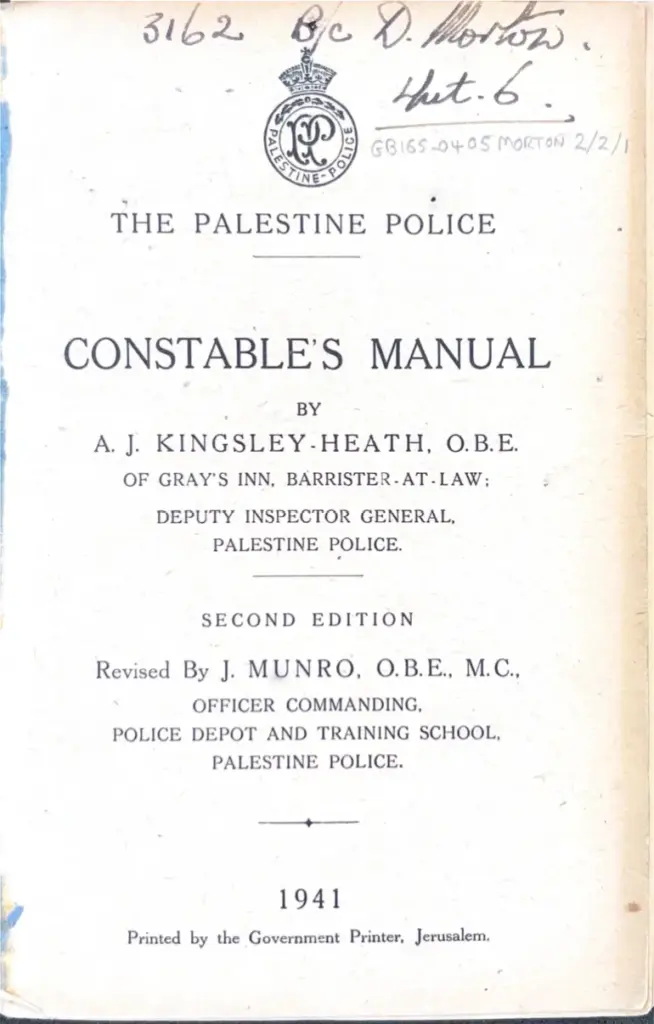
The police manuals issued by the regime did not need to explicitly order the use of violence. They created the conditions where this could be denied: arrests without warrants, forced entry, violent searches, joint police-military raids, and immunity for officers acting in „good faith.”.
Leah Tsemel, a veteran Israeli lawyer, pointed out that Israel inherited the practice of administrative detention from the Mandate, under which Palestinians are held in prison indefinitely without being charged.
The same logic has outlived its mandate. Britain did not merely write the playbook for the 1948 Nakba and the ongoing Nakba that has persisted ever since. It cleared the way.
Kenya: What does the empire do when it thinks no one is watching?
In the 1950s, the same imperial power that governed Palestine operated a network of prison camps in Kenya—known as the „Pipeline”—designed to crush the Mau Mau uprising against British rule.
Survivors have reported castration, rape with bottles and broken glass, the insertion of objects into the anus and vagina, forced nudity during interrogation, and sexual humiliation as methods of breaking political will. In 2013, following a long legal battle by Mau Mau survivors represented by the British law firm Leigh Day, the UK government settled the case out of court.
Algeria: France is making torture official policy
If Great Britain built the architecture, France wrote the doctrine.
During the Algerian War, the French army raped Algerian women while they were in detention and in their homes. Algerian men were stripped naked, subjected to electric shocks, and threatened with the rape of their relatives.
The case of Djamila Boupacha, who was tortured and raped with a bottle by French paratroopers, became an international scandal because Gisele Halimi, a French-Tunisian lawyer and activist, and Simone de Beauvoir, a French philosopher and activist, took up the cause and refused to let it fade away.
In Blida, about 45 km from the capital of Algeria, French psychiatrist and philosopher Frantz Fanon treated Algerian victims of French torture in the same hospital where he also treated the French personnel who had perpetrated it.
Torture—as Fanon understood it—was not an excess of war. It was the very essence of the colonial relationship. As Albanese puts it: „Frantz Fanon healed both the victims and the perpetrators of torture.”
Israel and France: An Alliance Forged in Algerian Blood
Israel did not merely inherit the British framework of sexual violence and torture. Almost immediately after its founding in 1948, it also forged ties with the French. In October 1956, Great Britain, France, and Israel signed the Sèvres Protocol, which was a secret conspiracy to attack Egypt and overthrow Gamal Abdel Nasser.
France helped Israel build the Dimona nuclear power plant. French scientists and engineers played a central role in designing the reactor and processing infrastructure that enabled Israel to develop the atomic bomb.
But the atomic bomb wasn’t the only thing Israel learned from France. It learned to view the anti-colonial population as the enemy itself, and that the colonized body—its sleep, sexuality, family, and shame—are all legitimate battlefields. The Israeli government’s 1987 Landau Commission referred to this as „moderate physical pressure.” In 1999, the Israeli Supreme Court banned certain methods while leaving the door open to the use of such practices when a „state of emergency” requires it.
And who decides what is „necessary”? The very same Israeli security apparatus that the Supreme Court ruling was supposed to rein in.
„Since the founding of Israel”
There's nothing surprising about that.
„Sexual violence is something that Israel has historically perpetrated against all Palestinians since the founding of Israel,” says Khraim of WLAC. „It is well known that in 1948, during the ethnic [cleansing], sexual violence was used as a tool for the ethnic cleansing of Palestinians.”
Benny Morris, an Israeli historian, drawing on declassified archives, acknowledged at least a dozen documented cases of rape committed by Israeli forces in 1948—a figure he described as „the tip of the iceberg.”.
By the 1970s and 1980s, even Israeli insiders acknowledged that they had used violence during interrogations. Human Rights Watch documented these methods in 1994.
The names change over time—Rasmea Odeh in 1969, Mohammed Zaki Al-Bakri in 2024—but the methods do not.
A naked body. A bound body. A father brought into the room. A dog brought into the room. A camera. A laugh. A file with a number on it.
The survivors who are speaking out now
The historical archive is important because it sounds like the present.
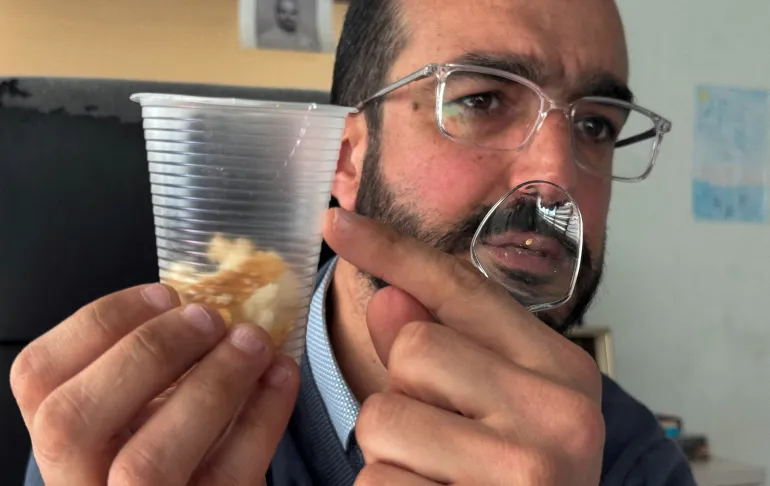
A Bodies of Evidence: Israel’s Darkest Weapon In the film *[Title]*, a former detainee at Jenin describes how a female guard made sexual threats against his sister during a body search. „I’ll never forget that moment,” he says. „Tears were falling. I was 18.”
Mohammed Zaki Al-Bakri describes the abused body in simpler terms: „You are no longer a human being. You are just a body under their control.” This is the mechanism described by Kifaya Khraim: the use of family, stigma, and shame as weapons.
Sde Teiman: the present link in the chain
If anyone needs a single location where the colonial chain reaches its current extent, it is Sde Teiman. Located in the Negev Desert, this military base—which was converted into a detention facility for Palestinians from Gaza after October 7—has become a symbol of Sde Teiman—as evidenced by the released detainees, Israeli whistleblowers, B’Tselem, the Israeli Public Committee Against Torture, and the leaked footage—has become a symbol of what Israel’s detention system has become after its formal constraints collapsed.
As the film’s opening news report states: „All charges have been dropped against the five soldiers accused of sexually assaulting a Palestinian prisoner at the Sde Teiman military prison in July 2024.” The detainees reported that they were kept handcuffed and blindfolded for weeks, denied medical care, beaten, starved, kept in diapers, and sexually abused. In March 2026, the Israeli army’s chief legal officer dropped the charges in the high-profile sexual abuse case. Amnesty International called the decision „shameful.”.
An extraordinary public debate that erupted after the scandal broke succinctly summarized the underlying doctrine. During a Knesset debate in July 2024, Palestinian politician Ahmad Tibi asked whether it could ever be legitimate to „insert a stick into a person’s rectum.” Hanoch Milwidsky, a Knesset member from Prime Minister Benjamin Netanyahu’s Likud party, replied: „If he is a Nukhba [Hamas fighter], everything we do is legitimate. Everything.” It was a chilling moment: not a denial of the abuse, but its defense through the language of necessity. In this sentence, the logic of the exception became explicit—that as soon as a detainee is designated an enemy, the law can be suspended, the body violated, and cruelty reframed as security.
In 2025, the UN Secretary-General’s annual report on conflict-related sexual violence listed both Israel and Palestine as situations of concern, citing patterns of sexual violence by Israeli forces against Palestinian detainees.
„An environment rife with torture”
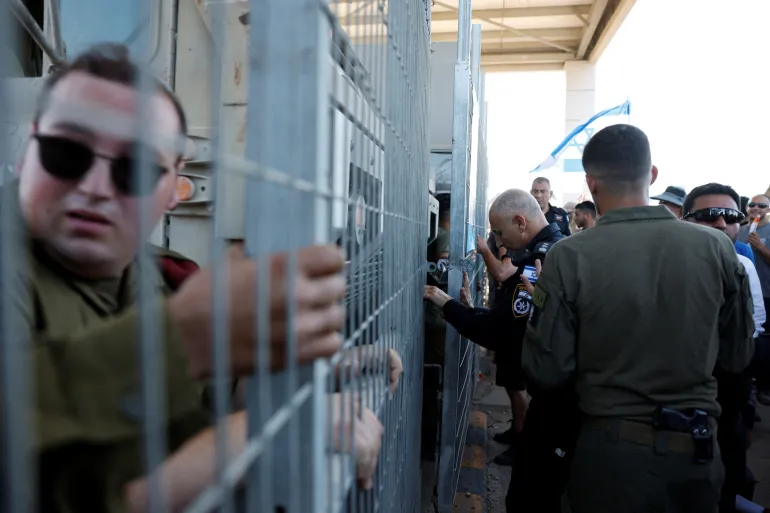
Albanese calls it an „environment of torture”: a place where the infliction of pain is deliberate and constant. This repression extends even to those who try to document it. According to Tahseen Elayyan, a staff member at the Palestinian human rights organization Al-Haq, his organization was targeted because of its work. In October 2021, Israel’s Ministry of Defense, under the leadership of then-Defense Minister Benny Gantz, designated Al-Haq and five other Palestinian civil society groups as „terrorist organizations,” a move that UN experts condemned as an attack on Palestinian human rights defenders.
Leah Tsemel, a veteran Israeli lawyer, describes the atmosphere following October 7 as „pure harassment.” „The humiliation of Palestinians and the treatment of them as if they were not human beings doesn’t bother anyone.”
Sexual violence is the most intimate weapon in this context. It works because it silences people.
This is what Ghaith witnessed in 1969, when Rasmea Odeh’s father was brought to his cell. This is what survivors describe today, when soldiers film the abuse and threaten to send the footage to their families. Silence is a weapon. Breaking the silence is resistance.
Why do bodies remember?
In 1969, an Israeli interrogator reduced Rasmea Odeh’s father to tears in a corridor in Jerusalem. In 1979, Rasmea appeared before a UN committee in Geneva and told the world what had been done to her body. The world listened. It did little.
In 2026, the Bodies of Evidence: Israel’s Darkest Weapon The survivors who testify in the film *The Testimony* do the same thing, at the same cost, within a system designed to make their voices inaudible. Raji Sourani, founder and director of the Palestinian Center for Human Rights, puts it simply: „We do not want Gaza to be the graveyard of international law, and we want the people of Gaza to receive justice and dignity.”
Chantal Meloni, an Italian criminal law expert and professor of international criminal law at the University of Milan, and senior legal advisor for international crimes and accountability at the European Center for Constitutional and Human Rights, describes this moment as „the first concrete cracks appearing in the wall of long-standing impunity.”.
This impunity, just like the sexual violence it protects, has also traveled: from Ireland to Palestine, from Palestine to Kenya, from Algiers to Pretoria, and from there to Hebron. When they lower their own flags, empires pass on their architecture of abuse to the next regime willing to use it. Then they insist that it never happened.
The Palestinian survivors speaking out today are not asking the world to believe that an unprecedented horror took place. They are asking the world to recognize an old one, and to act this time. The uniforms change. The legal vocabulary changes. The state of emergency is renamed. But the body keeps the record.
Watch "Bodies of Evidence" on Al Jazeera English's YouTube channel.