Utolsó frissítés: 2026.06.08. — Szerző: Anti-Propaganda News Blog
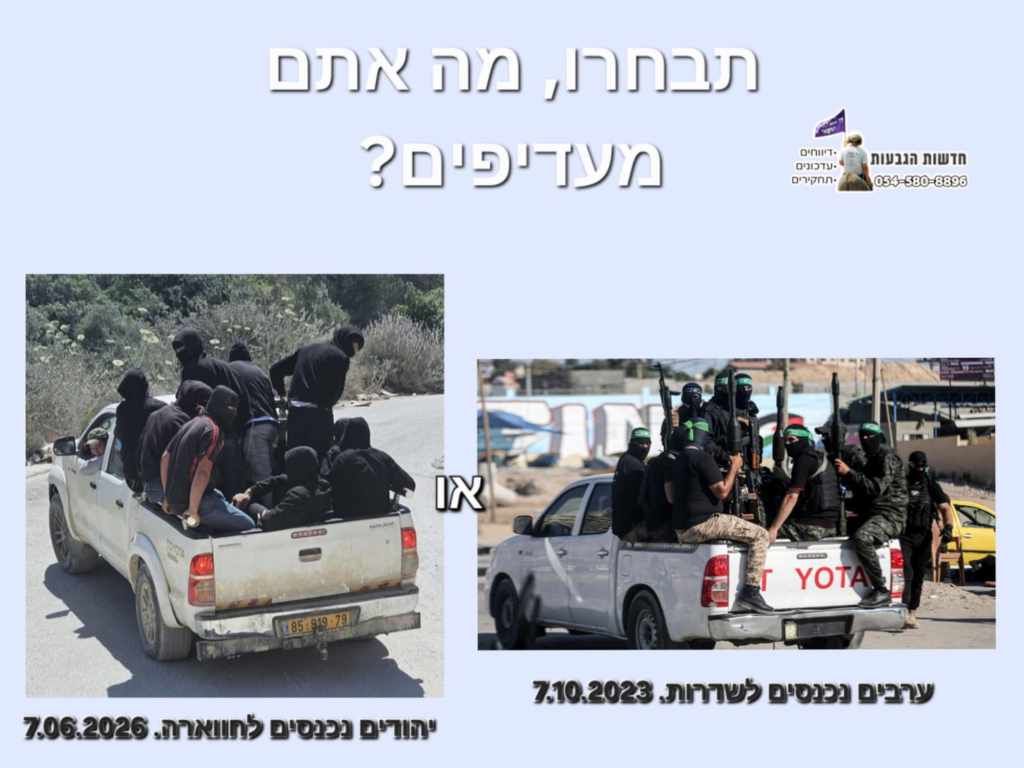
When the image circulated over the weekend showing settlers dressed in black driving into the West Bank town of Huwara to attack Palestinians, many Israelis saw visual parallels with the October 7 Hamas attack. Was the similarity intentional? Are there different levels of terrorism?
By Esther Solomon, June 7, 2026, Haaretz
A white Toyota pickup truck filled with armed men dressed in black and wearing ski masks.
This was one of those dark, iconic images that has been etched into the memory of Israelis since October 7, 2023. The footage came from the Israeli city of Sderot and showed Hamas terrorists —in ISIS-style—roaming the city, carrying out a massacre, killing 37 civilians, 11 police officers, two firefighters, and three IDF soldiers (Israel Defense Forces).
This weekend, the same scene played out again—but this time it was a white Toyota pickup truck filled with people dressed in black and wearing ski masks with Jewish terrorists, who entered the West Bank town of Huwara.
At least eight Palestinians were wounded; settlers and an Israeli soldier in uniform were also filmed beating two men with sticks.
What is the only visual clue that distinguishes the two images? The gunmen on October 7 were carrying Kalashnikovs and wearing green headbands with white lettering Sahada (the Islamic creed) – bearing the emblem of Hamas’s armed wing. The militants on June 6 cicitet (a ritual garment with tassels worn by observant Jews).
According to Yossi Lemel, an award-winning graphic artist and expert on political art, the visual reflection was a deliberate choice. The violent settlers wanted to create their own „shocking icon” by framing their actions as „revenge” for October 7—effectively reclaiming ownership of the „Toyota terror.”.
„This is part of a deliberate manipulation typical of provocateurs,” he says, “and it undoubtedly has visual impact. But while the WhatsApp groups of violent settlers celebrated the comparison because of its intimidating effect, many Israelis simply equated them with Hamas, often calling them “Jewish Nukhbas,” a reference to Hamas’s elite units.
Every day, another pogrom is carried out against Palestinians in the West Bank. This has become a shocking routine; Saturday (Shabbat) is a favored day for coordinated attacks. But Huwara also has a different resonance compared to October 7.
This was the scene of a riot in late February 2023 that shattered the general apathy toward settler violence. The immediate trigger was the murder of two settler brothers from Har Bracha; In „retaliation,” hundreds of settlers threw stones and Molotov cocktails at Palestinian homes, shot and killed a 37-year-old man, and wounded about 100 people. Israeli headlines used the term „pogrom” for the first time to describe the violence.
Huwara has become a hotbed of ongoing terrorist attacks and vigilante settler activity, to the extent that, shortly before October 7, the IDF was forced to redeploy units to the area from the Gaza Strip border.
Following the February pogrom, far-right Finance Minister Bezalel Smotrich called for the „eradication” of Huwara. On Sunday morning, following the latest attack, an expert on Channel 12„s morning show repeated the call: ”Huwara should have been wiped out long ago… it should suffer the same fate as the Jenin refugee camp, Beit Hanoun [in Gaza], and Bint Jbeil [in southern Lebanon].”
For Eliaz Cohen, founder of a group of settlers protesting Jewish violence, the pride displayed by the Huwarai attackers in their propaganda is „unbelievable.” But he believes they have crossed a line: „It’s an own goal” in the war of narratives, he says. Cohen himself firmly rejects the comparison between Hamas and the vigilantes perched on the hilltop, calling it „immoral,” but he views the failure to act against the violent settlers—whose actions have reached „horrific” proportions—as „a complete military, moral, and governmental failure.”.

Cohen doesn’t expect much from the police, who have long since kowtowed to National Security Minister Itamar Ben-Gvir. The Shin Bet (internal security service), whose Jewish division once fought against settler terrorism, has lost its power. But he would expect more from the IDF, whose regional commander used the term „Jewish terror” last month.
Cohen has a radical proposal: The same rules of engagement should be applied to Jewish terrorists as are used in response to Palestinian acts of terrorism—from stone-throwing to shootings. „If there is no equal treatment, the message is: this isn’t really terrorism, and we can’t or won’t deal with it. This leads to anarchy and only encourages further Jewish violence,” he says.
„The attacks took place well before October 7”
Abdullah Rade, a Palestinian farmer and activist in Al-Lubban Al-Gharbi, 35 kilometers east of Huwarah, who faces increasing pressure from settlers and the IDF, rejects all attempts to portray violent settlers as a dangerous but isolated phenomenon, or to characterize the current tsunami of anti-Palestinian violence as a „reaction” to October 7.
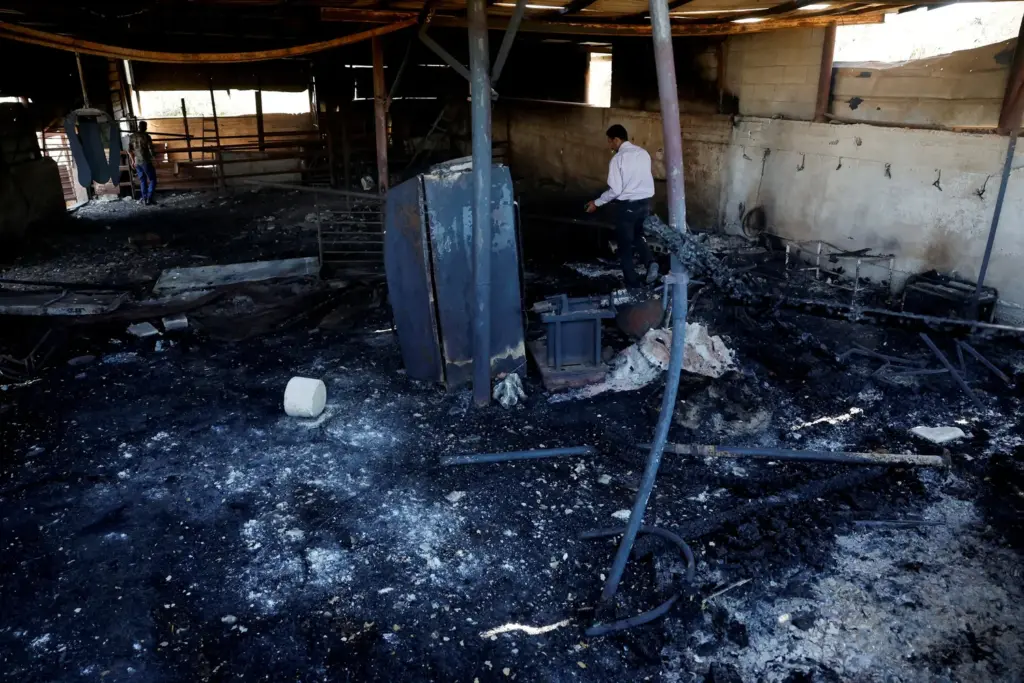
„The settlers” attacks began well before October 7. In recent years, they have increased dramatically in both frequency and intensity,„ he says. ”They burn our trees and farms, restrict our movement, steal our livestock, demolish our shops, workplaces, and farms, confiscate our land, cut off and steal our water supply; they kill, torture, and abuse young people, children, women, and the elderly.”
For Rade, it is clear that the settlers are carrying out state policy: „These are systematic terrorist attacks sponsored by the state to facilitate expulsion and ethnic cleansing.”
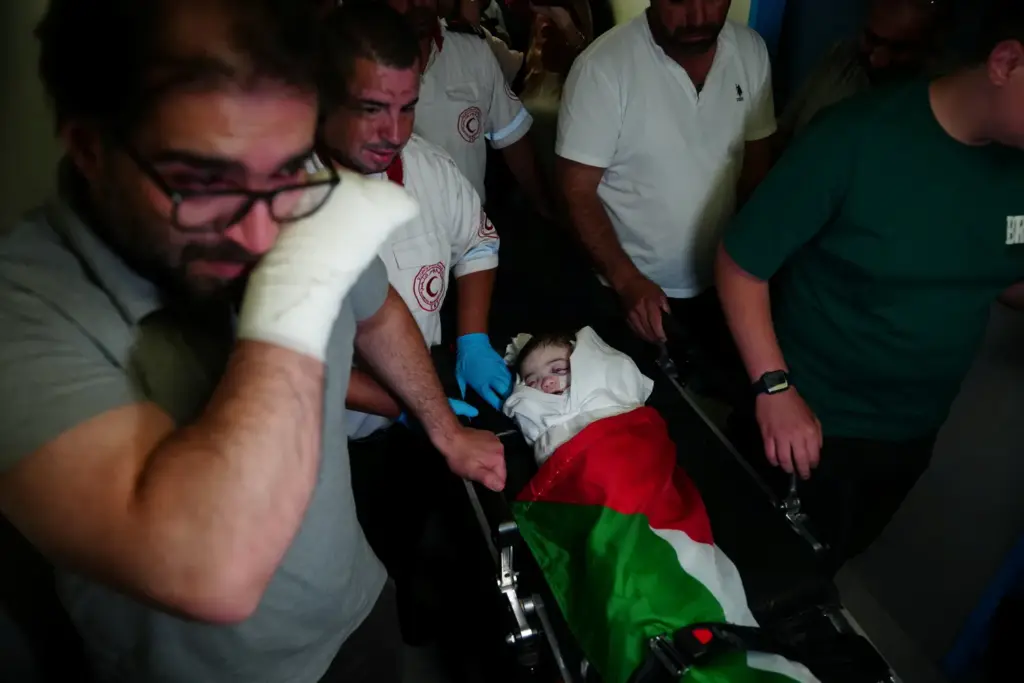
Indeed, Palestinians do not die at the hands of settlers alone. On Friday, a 7-month-old infant, Sam Fahed Abu Haykal, was shot by an Israeli soldier in Hebron. And it is hard to dismiss Abdullah’s claim that various state agencies are making coordinated efforts to support settler violence. In another disheartening routine, the IDF announced that it has not yet launched an investigation into little Sam’s death, just as it has failed to determine which soldier beat the Palestinian in Huwara.
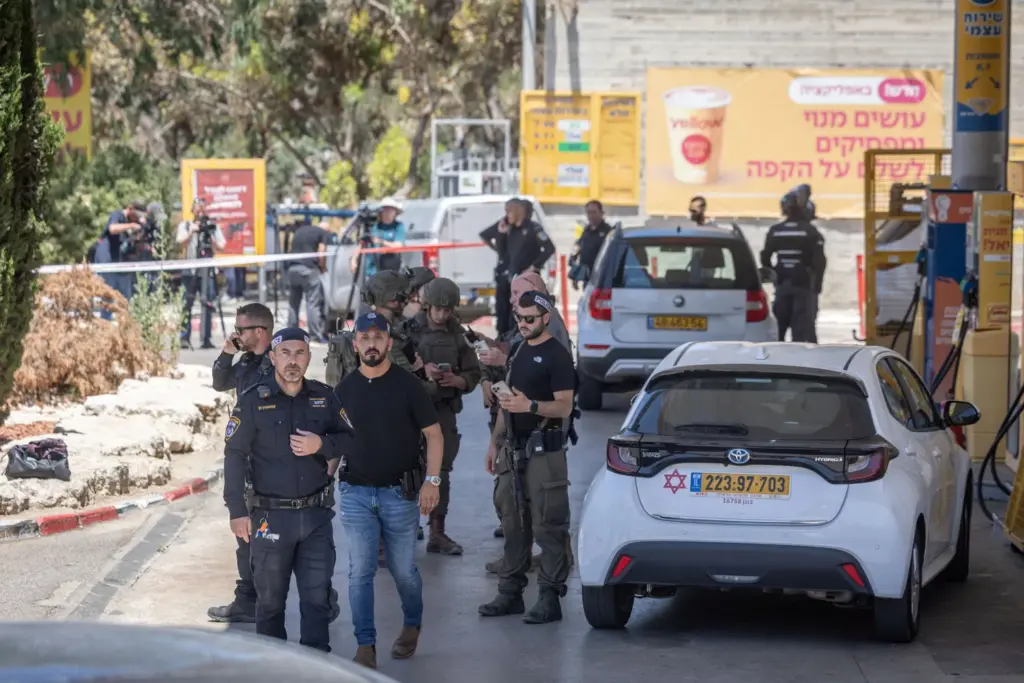
By lunchtime on Sunday, yet another grotesque terrorist attack had made headlines, this time carried out by an Arab citizen of Israel. The 35-year-old man carried out a shooting spree near the town of Kochav Yair in central Israel, killing 55-year-old Haim Kalomiti and wounding five others.
Arab members of parliament condemned the attacker in Kochav Yair. „Terrorist attacks and violence are not our way… Life is the highest value. We unequivocally condemn the terrorist attack,” Ahmad Tibi wrote on X; Ayman Odeh wrote that „harming innocent people is absolutely forbidden, and this principle applies to everyone, Israelis and Palestinians alike.”
This stands in sharp contrast to the settler leaders and their ministerial allies, who call for destruction in the wake of Palestinian terrorist attacks, yet remain silent or offer justifications following Jewish terrorist attacks. Prime Minister Benjamin Netanyahu himself did not comment on the Huwar attack. Arab members of parliament are well aware that right-wing voices calling for the destruction of cities in the West Bank, Gaza, and cities in Lebanon, are just a hair’s breadth away from proposing the same solution for the Arab-Israeli city of Taibe, where the attacker lived.
There has been, and will continue to be, international condemnation of the rising settler violence. This is useful, even if largely symbolic, because it keeps the issue on the agenda in international forums and reminds the Netanyahu government that it is not invisible to the world.
But the fire is within the house. As long as the Israeli government has no trouble finding the words to condemn violence committed by Palestinians, but loses its voice when Jews commit violence, Israel continues to incubate a Jewish terrorist movement, fueled by theocratic ideology and territorial maximalism, and shielded by institutional support—and this, regardless of whether it is justifiable or not, will prompt people to draw comparisons with the perpetrators of October 7.