Utolsó frissítés: 2026.06.05. — Szerző: Anti-Propaganda News Blog
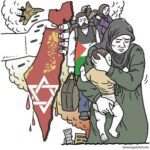
When it comes to the 1967 Six-Day War, mainstream historiography and public consciousness tend to focus on the lightning-fast Israeli military victory, the conquest of the Western Wall in Jerusalem, and the redrawing of the geopolitical map of the Middle East. But there is a dark, newly revealed chapter in the war: the systematic destruction of Palestinian villages in the West Bank and the Golan Heights. Evidence emerging from the depths of Israeli archives and from the testimonies of veterans paints a picture of a „second Nakba” that official memory policies have tried to gloss over for decades.
While the Palestinian exodus (the Nakba, or Catastrophe) that accompanied the 1948 War of Independence is now part of Israeli academic and public discourse, albeit in the midst of heated debate, the events in Chassia and Latrun in June 1967 are still largely ignored in textbooks. The latest research by Israeli historian Adam Raz and the testimonies of soldiers who served on the front lines are now breaking this silence.
The liquidation of the Latrun Valley: Homes of ten thousand people turned into mist
In the immediate aftermath of the war, the Israeli Defense Forces (IDF) command decided to permanently reorganize the Latrun Valley, a key corridor between Jerusalem and Tel Aviv, for strategic and demographic reasons. Three thriving Palestinian villages – Imwas, Yalo and Beit Nuba – were designated for complete liquidation.
The operation was not an isolated overreach, but an action carried out according to an organized chroot logic:
-
The population was forced to leave their homes by armed force, and they were also denied the right to collect their personal belongings.
-
The houses that remained empty were razed to the ground with bulldozers and explosions.
-
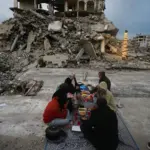
Roughly 10,000 Palestinians became homeless within hours in an area that was later declared a greenbelt picnic area called „Ayalon Park,” concealing the ruins from unsuspecting visitors.
[June 1967] ──> [Order: Evacuate Villages] ──> [Bulldozers and Destruction] ──> [Ayalon National Park (Covering the Past)]
„"They told us not to take prisoners" - Shocking veteran testimonies
The most shocking elements of the newly released documents are the direct quotes that come from the after-death accounts of former Israeli soldiers and officers. The „"We were ordered to kill"” and the „"Take no prisoners"” These types of instructions reflect a battlefield morale and higher command attitude that runs sharply counter to the official myth of the "most moral army.".
According to the soldiers' recollections, the aim was not simply to push back the Jordanian army, but to prepare for the future annexation of the area by intimidating and expelling the local Arab population. The massacres in Khassia and the destruction of villages in the Golan Heights forced nearly 300,000 Palestinians and Syrians to flee to the interior of the West Bank or to Jordan.
Censorship of memory and collective amnesia
The article highlights the structural mechanism by which the Israeli state apparatus successfully kept these facts away from its own society. Military files on the events of 1967 were classified for decades, critical voices were marginalized, and the physical ruins were removed from the landscape through afforestation and landscaping.
As a result, for the average Israeli citizen, 1967 is a pure symbol of survival and a legitimate war of defense, while in Palestinian collective memory, this date marks the beginning of the institutionalization of occupation, disenfranchisement, and the final loss of homes.
Conclusion: Shadows of the Past in the Present
Uncovering the „forgotten Nakba” of 1967 is not just a historical end in itself. It helps us understand current settler politics in the West Bank, the legal and military patterns of land expropriation, and highlights how the war of narratives in the Middle East conflict is at least as fierce in the archives and columns of the press as it once was in the trenches of the Latrun Valley.
Sources:
The research and press materials uncovered by Adam Raz on the events in the West Bank and Khassia in 1967, as well as the destruction of the villages in the Latrun Valley, are based on the following primary and secondary sources:
1. Primary Israeli press source
-
Haaretz (English and Hebrew edition): The investigative article Adam Raz (employee of the Akevot Research Institute) and was published in the latest edition, early June 2026.
-
Contact: In the Haaretz online archive, the author's name and the article's title („"The 1967 Nakba that Israelis don't know about"”) can be accessed by searching for it (behind a subscription wall).
-
2. Historical background and archival sources
-
Akevot Institute for Israeli-Palestinian Conflict Research: This is the Israeli civilian and scientific research institute that systematically processes declassified documents from military and state archives (Israeli State Archives, IDF Archives). The official military orders for the 1967 displacements and destructions in the West Bank (including the Latrun Valley) are documented in their database.
-
Zochrot (Israeli NGO): A Tel Aviv-based organization dedicated to the memory of the 1948 and 1967 Palestinian displacement and village destructions (including Imwas, Yalo, and Beit Nuba). They collect maps, testimonies, and memoirs of Chassian survivors in Hebrew and English.
3. International and human rights reports
-
B'Tselem (The Israeli Information Center for Human Rights in the Occupied Territories): Their comprehensive reports, presenting the history of the Israeli occupation and the legal-military background of the land expropriations, devote a separate chapter to the 1967 annexation of the Latrun Valley and the history of the Canada Park (Ayalon Park) established there.
-
The United Nations (UN reports – 1967): Reports from the months following the Six-Day War (such as the report by the UN Secretary-General's Special Representative, Nils-Göran Gussing), which already recorded the destruction of villages in the West Bank and the humanitarian crisis.
János Máté