Utolsó frissítés: 2026.09.09. — Szerző: Anti-Propaganda News Blog
As Israel continues to restrict aid, Gaza's health system struggles to treat and contain the spread of diseases in the overcrowded tent camps.
Eman Abu Jame counted her family among the lucky ones. Israel bombed their home in the southern Gaza Strip early in the war, forcing them to move from one shelter to another. But during the first two years of the genocide, neither she, her husband, nor her children suffered from any serious health problems.
All that changed in October 2025, when they found shelter in a crowded tent camp in Khan Younis.
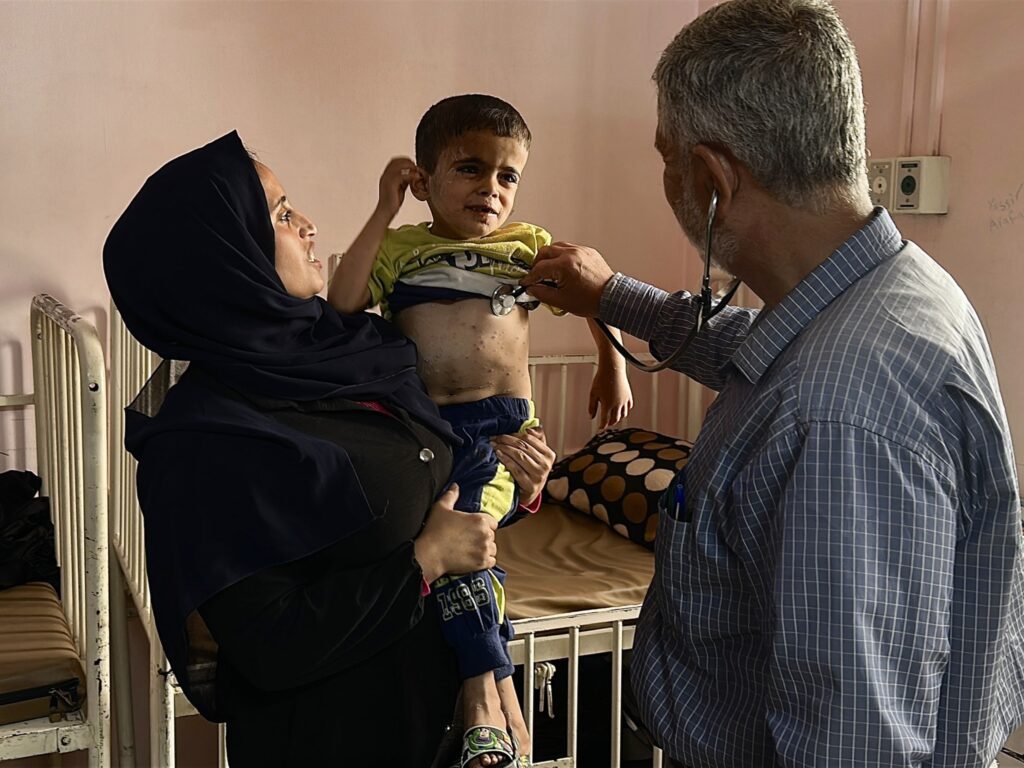
By the time they arrived, poor sanitation, insect infestations, and severe overcrowding had turned the camp into a hotbed of disease. Two months later, Abu Jame’s 8-year-old son, Mousa, and her 47-year-old husband, Abdul Majeed, began showing symptoms: Their bodies were swollen, accompanied by severe diarrhea and a high fever.
Due to difficult economic conditions and skyrocketing prices for meat, fish, and other protein-rich foods, their protein levels rapidly decreased, which worsened their ability to retain fluid.
„We couldn’t buy food or water at all,” Abu Jame told +972 magazine. ”Everything was so expensive back then, and we just didn’t have the money. My husband couldn’t afford anything – not even bread.”
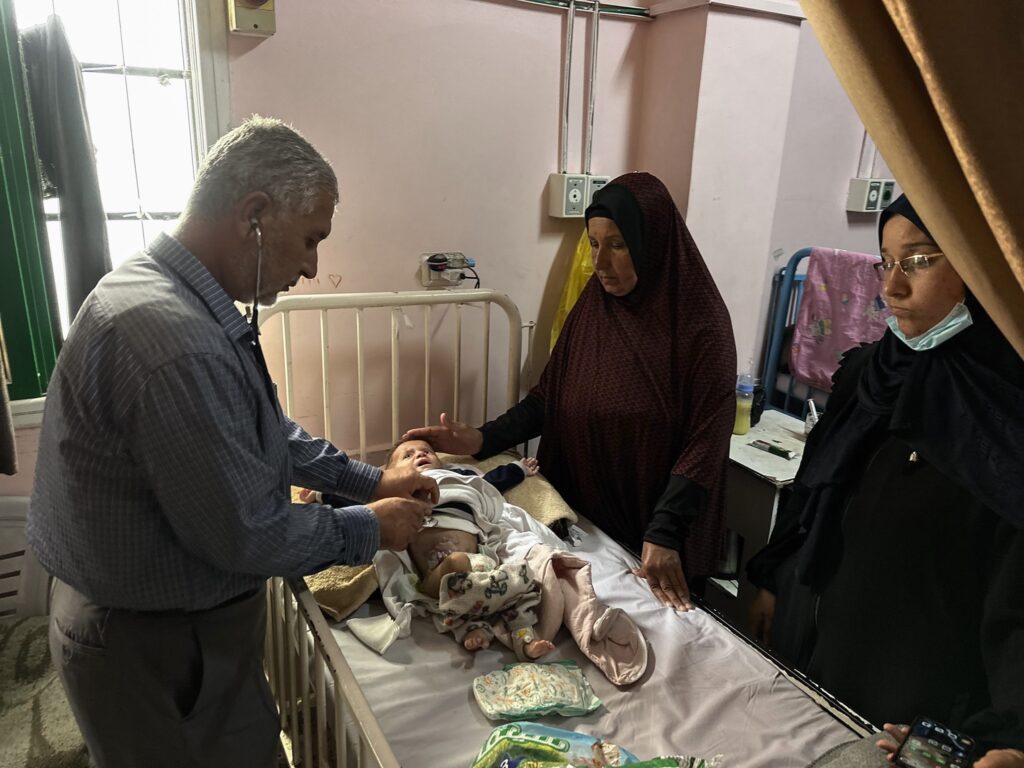
Doctors had a hard time diagnosing both father and son. They initially suspected gluten allergy, but tests ruled it out. Traveling abroad for treatment was also impossible due to border closures. The only effective treatment was medical albumin, a protein solution that helped stabilize their condition.
„When [Musa] took the medicine, he got better,” Abu Jame explained. „But every time he missed it, his body started swelling again.”
However, treatment has been extremely difficult to access. Since October 7, 2023, Israel has severely restricted the import of medicines and prevented international NGOs from delivering medical supplies to the Strip. After the ceasefire was announced last October, Israel continued to block aid; according to the Gaza Health Ministry, 47 percent of essential medicines, 59 percent of medical supplies, and 87 percent of laboratory testing materials were depleted this month.
As the medications ran out, Musa's body continued to swell with fluid, and he died in January. Three months later, Abdul Majeed also died of the same mysterious illness, which doctors could not diagnose.
Although the disease has not been identified, it has been clearly linked to the conditions in the camp – potentially transmitted through rodent bites or ectoparasite infestation. According to the UN, there were more than 70,000 cases of such infections in Gaza in the first four months of 2026, where parasites live on or under the skin and become vectors of disease. More than 80 percent of displacement sites report visible pests in addition to rampant skin infections such as scabies, lice and bed bugs, while Save the Children recently noted that two-thirds of children in Gaza live in displacement sites that are at risk of these diseases.
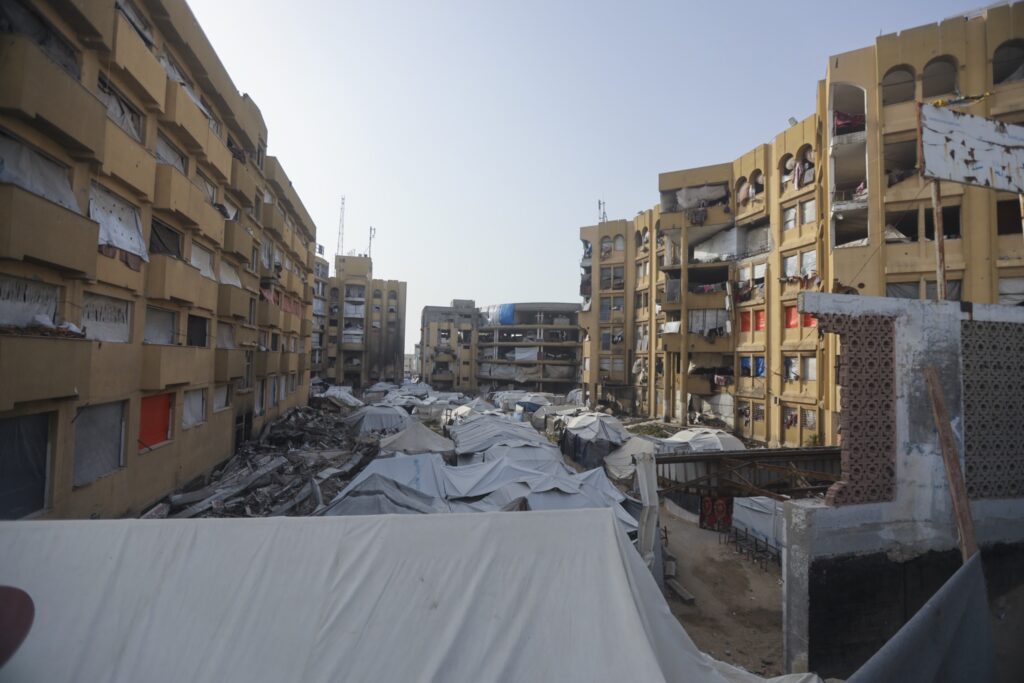
Dr. Ayman Abu Rahma, director of the Preventive Medicine Department at the Ministry of Health, told +972 that solid waste – including medical waste –, sewage and bodies buried under rubble all contribute to the spread of rodents and diseases.
„The environmental situation has unfortunately been seriously deteriorating since the beginning of the war and continues to do so,” he explained. „The crisis has now reached its peak: although the problem already existed in 2024 and 2025, the scale of this summer’s infestation is unprecedented. High temperatures have accelerated the reproduction of insects and rodents, while hundreds of thousands of tons of uncollected garbage have accumulated around the tents due to destroyed equipment and fuel shortages.”
Abu Rahma added that the destruction of Israel’s sewage infrastructure has further worsened the situation, and the ongoing Israeli siege has left the local market without the materials needed to combat the rodent infestation. „Damaged sewer systems have created stagnant pools of sewage that serve as breeding grounds for pests, and the widespread debris has become a natural habitat for rats. Restrictions on the import of pesticides and poison baits have made effective control almost impossible.”
Abu Rahma noted that there has been a significant increase in complaints from Gazans living in tents about rats. „The rodents are gnawing on the limbs of sleeping children and damaging objects and clothing. There have also been reports of rodent species that have not been seen before and are native to the Gaza Strip, some of which are believed to have been brought in by the Israeli army during the war.”
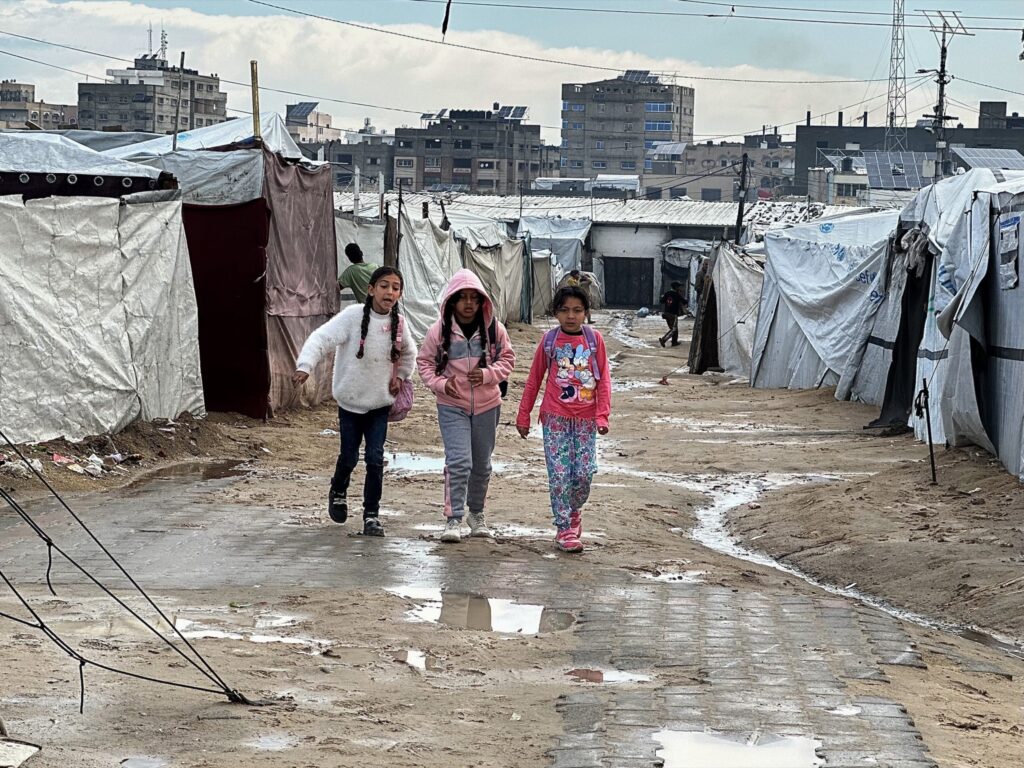
In the Khan Younis refugee camp, Abu Jame’s six-year-old son, Yasser, suffers from the same illnesses and symptoms as his father and brother. Moreover, when they went to the nearby Nasser Hospital for treatment, Yasser’s immune system was so weakened by the illness that he contracted another skin infection.
„There is no cleanliness at all, and infections spread easily from those around us,” said the grieving 32-year-old mother. „Even the hospitals are neglected, the rooms are tiny, and the patients are next to each other.”
Fortunately, Yasser's health is currently showing small but steady signs of improvement. Abu Jame is now hoping to get a medical referral for treatment abroad and praying that he doesn't suffer the same fate as his father and brother.
Patients in Gaza's tent camps
In May 2024, during a weeks-long Israeli offensive in Jabalia, northern Gaza, 5-year-old Rital Halawa was playing outside her bombed-out house in the city center when an Israeli quadcopter drone appeared overhead – and dropped a grenade.
„"The girl was engulfed in flames. I saw her screaming," her mother, 27-year-old Samar, recalled.
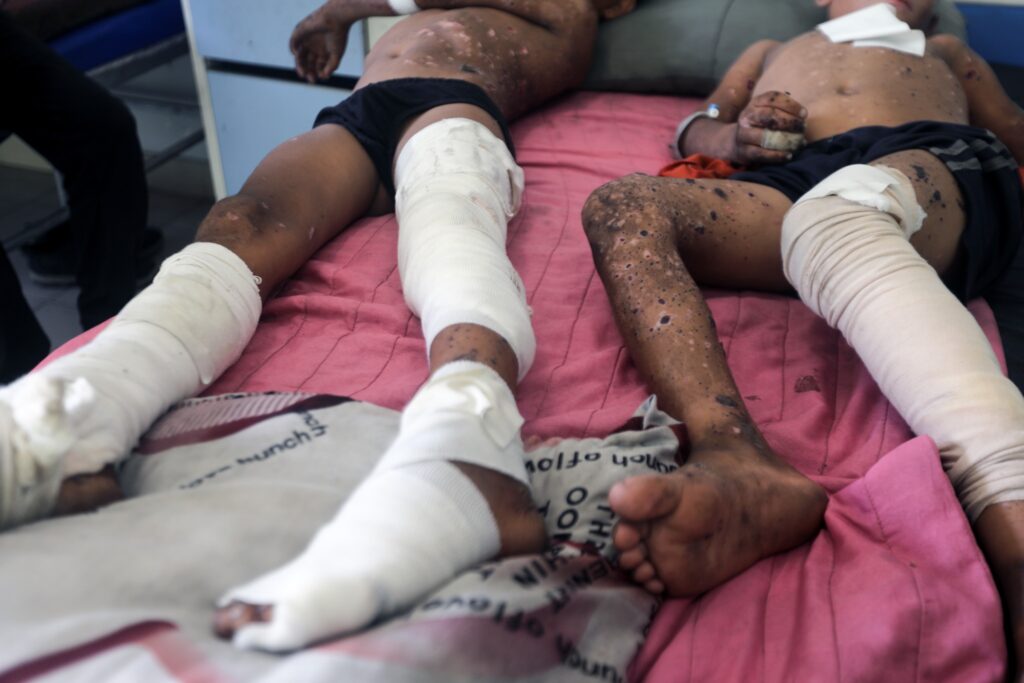
Rital suffered severe second- and third-degree burns to her face, chest, abdomen and legs. Since their home in Jabalia was bombed in November 2023, the family has been living in tents amid soaring temperatures, sewage and a swarm of stinging insects – conditions that have severely hampered her recovery. With no electricity or ventilation, Rital „can’t breathe,” Samar said, her body sweating profusely under the tight, pressure-fitting clothing used to treat burns.
The heat causes intense itching, which creates a dangerous cycle of re-injury. „You keep scratching and scratching, which irritates the tissue, tears it up, and causes bleeding,” Samar explained. The reopened raw tissue is then exposed to dangerous infections, which further exacerbate the irritation.
Dr. Ibrahim Haboub, a dermatologist at Al-Shifa Hospital in Gaza, described to +972 the increasing number of skin diseases among displaced Gazans. Insect bites have become the most common problem, especially in the Al-Mawasi neighborhood of Khan Younis, and Haboub warned that children are particularly at risk, as constant scratching often leads to secondary bacterial infections and more serious complications.
Haboub also reported widespread lice infestations and a sharp increase in scabies cases, caused by severe overcrowding in shelters, camps and schools. Other skin diseases, including fungal infections, have become more common in Gaza – especially among Palestinians detained in Israeli prisons, some of whom require prolonged and intensive treatment due to severe infections and drug resistance.
Haboub noted that this crisis is being exacerbated by a severe shortage of medical equipment. For the Halawa family, who are already struggling financially, these shortages have made Rital’s recovery nearly impossible. Her father is unemployed, and the family now relies on charities and soup kitchens to survive. Nutritious food is expensive, and Rital’s wounds were significantly aggravated at the height of Israel’s hunger strike last summer.
The essential medical creams alone cost 80 shekels ($20), on top of the travel costs for weekly physiotherapy sessions at the Médecins Sans Frontières (MSF) clinic, forcing the family to make painful sacrifices. „I won’t buy milk for my baby to pay for [the trip to physiotherapy],” Samar said.
The psychological toll is as devastating as the physical pain. Rital is often abused for his injuries, Samar explained, which drove him into a deep depression.
„The girl’s face is disfigured – I can’t hide it,” Samar said. „She needs specialized plastic surgery that is not available in Gaza.”
„"A completely man-made crisis"”
Craig Kenzie, medical coordinator for Doctors Without Borders in Gaza, said the Gaza Strip continues to be plagued by a „completely man-made and engineered humanitarian crisis” caused by Israel’s blockade, despite a ceasefire announced more than seven months ago.
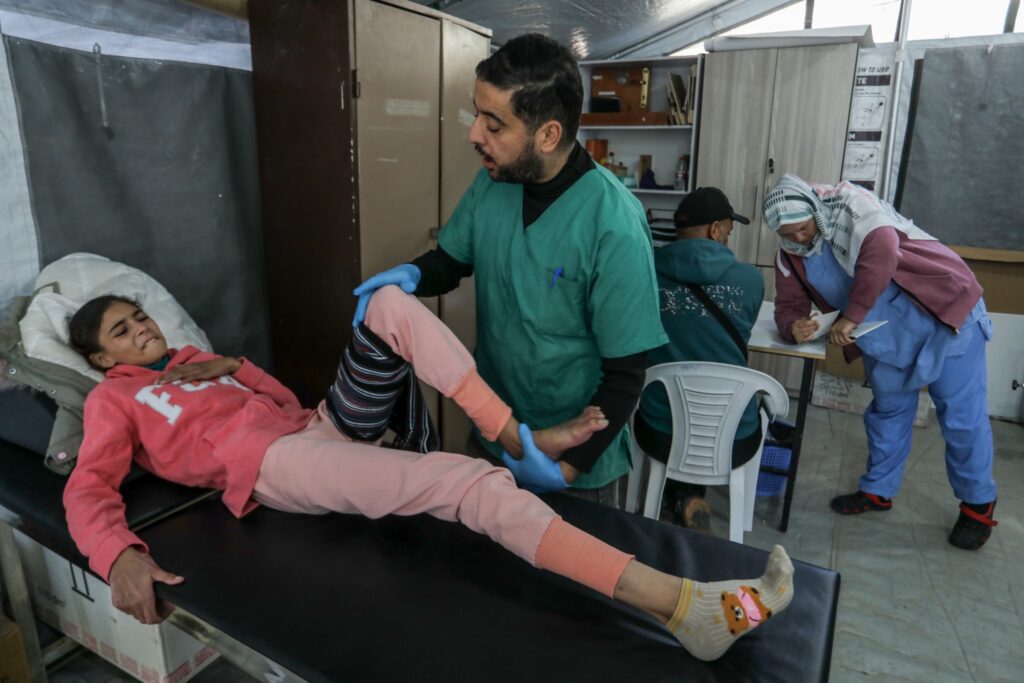
The organization, which has 1,500 local staff in Gaza, has been unable to bring in new international staff or medical equipment since early January due to Israeli restrictions. As Kenzie explained, this „seriously jeopardizes every aspect of our programs, which will have to be reduced or stopped altogether in the coming period.”.
More than half of the medicines used to treat chronic diseases are currently out of stock, he said. Essential wound dressing supplies are running low, while topical ointments used to treat skin diseases continue to be blocked by Israel without explanation.
„In Deir Al-Balah, we were doing surgeries in tents,” Kenzie said. „When the surgical equipment breaks down, there is no replacement because we can’t get replacement parts or equipment.”
A blokád nemcsak súlyos orvosi felszerelés- és személyzethiányt okozott, hanem tovább korlátozta a tiszta vízhez való hozzáférést is. Az MSF, a Gázai övezet egyik legnagyobb ivóvíz-elosztója szerint Izrael a Gázai övezet víz- és közegészségügyi infrastruktúrájának 90 százalékát elpusztította vagy megrongálta – amit a szervezet a kollektív büntetés egy formájának nevez.
„How to organize genocide?”
During the war, Israel also prevented the entry of materials needed to properly treat the water, forcing the Humanitarian Forces Foundation (MSF) to build improvised reverse osmosis water purification plants from salvaged parts. The generator-powered unit purifies groundwater contaminated with salt, dirt and sewage, producing 5 million liters of drinking water per day.
Yet, even operating this basic system raises difficult ethical and operational questions, Kenzie explained.
„Do they continue to make water for those in need today, knowing that the generator needs service, and if they start it today, it could break down tomorrow and never be fixed?” he asked. „Or do they shut it down and tell people, »No, I’m sorry. I don’t have clean water for you today«?”
What hurts Kenzie the most is that desperately needed aid is miles away while Israel continues to block its entry. „It is simply unacceptable,” she said, „that a government that is committing genocide can also block and limit the humanitarian response.”
Ahmed Dremly is a Gaza-based journalist whose writing has appeared in Middle East Eye, Mondoweiss, The Electronic Intifada, The Intercept, Al-Monitor, and other publications. He is currently studying in Italy after leaving Gaza in May 2026.