Utolsó frissítés: 2026.07.01. — Szerző: Anti-Propaganda News Blog
Israeli Prime Minister Benjamin Netanyahu's interview with the right-wing Channel 14 has sent shockwaves through the international community. In the shadow of the upcoming elections, the prime minister reaffirmed that his government's agenda remains the demographic transformation of the Gaza Strip, which the international community widely interprets as ethnic cleansing.
Normalizing the discourse: „Voluntary emigration” as a euphemism
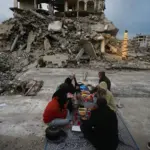
Netanyahu's use of the term "voluntary emigration" is not new, but it stands in stark contrast to the position of international legal experts. According to the UN and numerous human rights organizations, there can be no talk of true voluntariness in the case of a population that has been the victim of months of intense bombing, starvation, lack of basic infrastructure, and an environment that has been destroyed to the point of being uninhabitable.
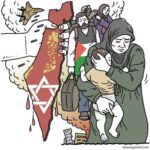
Critics say this rhetoric is a classic example of forced displacement, a war crime under the Geneva Conventions. For Gazans, the „choice” is not between staying and leaving, but between destruction and flight.
Coalition pressure and the ambitions of the settler movement
Netanyahu's reluctance on the issue of Gaza settlements is telling. Although the prime minister has avoided a direct answer, radical right-wing forces within his coalition (including the camp of Itamar Ben-Gvir and Bezalel Smotrich) openly support the re-colonization of the territory.
A The Jerusalem Post The pressure, also highlighted by, shows that Netanyahu's political survival is closely intertwined with the demands of the settler movement. If the prime minister commits to annexing the Gaza Strip, it will not only mean a definitive rejection of the two-state solution, but also a geopolitical fault line that will further deepen Israel's isolation even among its Western allies.
The complete elimination of the „two-state” vision
Political analysts say Netanyahu's statement that "there is no room for two states" between the Jordan River and the Mediterranean Sea marks the formal end of a decades-long peace process. With this declaration, Israel's leadership openly embraced a "one-state" model, but one in which the Palestinian population's civil and territorial rights are not guaranteed, which international lawyers say reinforces the accusation of apartheid.
Consequences and international repercussions
The international community, especially the European Union and the countries of the global South, are watching these developments with increasing concern. Keeping „voluntary emigration” on the agenda:
-
Legally: It may provide a basis for further investigations by the International Criminal Court (ICC) into the forced displacement of the population.
-
Diplomatically: It complicates normalization processes with Arab countries, as the situation in Gaza has become a major obstacle to regional stability.
-
Humanitarianly: The "uninhabitability" of the area (as a result of the genocidal war) initiated an irreversible process whose humanitarian consequences will have to be dealt with by international aid organizations for decades to come.
Summary: Netanyahu's words clearly indicate that in the run-up to the Gaza elections, the government is not seeking de-escalation, but rather perpetuating the occupation and demographic cleansing of the territory. The question is no longer whether this plan exists, but whether the international community can prevent its implementation.
Expert opinion: „Humanitarian disaster as a political tool”
According to Dr. Alistair Vance, a fellow at the International Law Institute, Netanyahu's rhetoric sets a dangerous precedent in modern conflict management.
„When a state leader speaks of »voluntary emigration« from an area that has previously been bombed to rubble by his own army, and where the supply of food, water and medicine has fallen below critical levels, legally we are no longer talking about voluntariness, but about coercion.” Vance explains.
According to the expert, the Prime Minister's statements could serve as key evidence for the International Criminal Court (ICC):
-
Proof of intent: „The ICC often has a difficult time proving intent to commit genocide or ethnic cleansing. However, Netanyahu’s open political discourse reveals deliberate, government-wide planning that treats demographic displacement not as a byproduct but as a strategic goal.”
-
Homelessness as a weapon: Dr. Vance highlights that „making the area uninhabitable” (the systematic destruction of infrastructure) corresponds to the so-called ’'coercive environment'’ (coercive environment) criteria. „If the civilian population has nowhere to live, nothing to eat, and no prospect of safety, then the departure is forced. Legally, this is not emigration, but forced displacement (forced transfer), which constitutes a war crime under the Rome Statute.”
-
Rejection of the two-state solution: According to the expert, the open rejection of the two-state solution ("there is no place for two states") sends a message to the international community that Israel no longer seeks a peaceful settlement supported by international law, but rather intends to maintain a de facto unitary state where the disenfranchisement of Palestinians has been institutionalized.
As Vance summarizes: „Netanyahu is not just delivering a message to his voters, he is preparing to dismantle international legal norms. The question is no longer what he plans, but whether global institutions will be able to respond to such an open challenge with sanctions that go beyond mere rhetoric.”
The split in Hungarian public discourse: Propaganda versus reality
Netanyahu's statements have not only shaken international diplomacy, but have also intensified social divisions in Hungary. The issue has long been not only a foreign policy issue, but also the front line of the "cultural war" taking place in the Hungarian information space.
The battle of the information bubbles
In Hungary, the perception of the Gaza conflict shows a sharp parallel with the division of political camps:
-
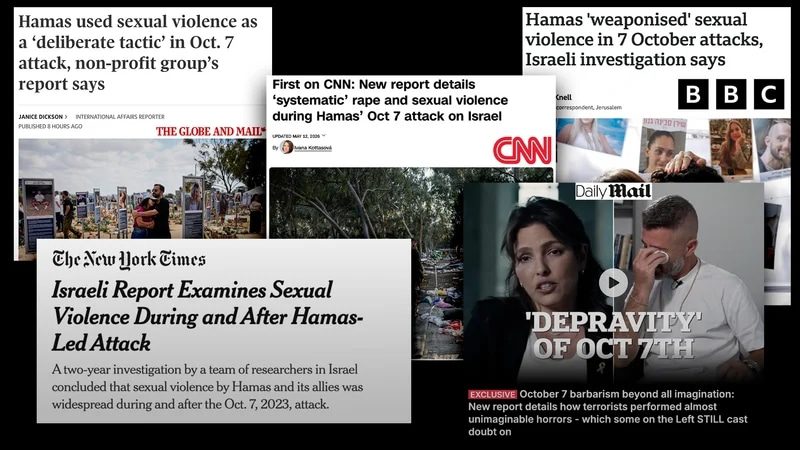
The government narrative: Pro-government media (such as Weeks or public service news channels) consistently presents what happened within the framework of „defense against terror”. In this narrative, the mention of the suffering of the Palestinian civilian population or the plans for displacement is often qualified as „anti-Semitic bias” or „terrorist sympathies”. This rhetorical strategy successfully insulates a part of the Hungarian electorate from international humanitarian criticism.
-
Marginalization of critical voices: Hungarian analysts, NGOs and independent media outlets that criticize Israel’s actions from the perspective of international law (for example, based on ICC or UN reports) often face accusations that they represent a „hostile ideology.” This has resulted in Hungarian public discourse making the use of the terms „genocide” or „ethnic cleansing” – even if based on expert consensus – almost taboo in mainstream political discourse.
Appropriation of the concept of „solidarity”
An interesting dichotomy can be observed: while the Hungarian government loudly proclaims the importance of Christian solidarity, the suffering of the Christian communities in Gaza or the voices calling for peace in the Holy Land are almost completely silenced if they are critical of Israel’s policies. This „selective empathy” pushes public discourse into a kind of moral nihilism: for the Hungarian voter, the situation in Gaza is not a flesh-and-blood reality, but an abstract, ideological issue, where „choosing a team” is more important than knowing the facts.
Why does this cause long-term damage?
This state of Hungarian public discourse poses several dangers:
-
Detachment from reality: A significant part of society lives in a „parallel reality” where international legal concepts (such as ethnic cleansing) lose their meaning because political loyalties override them.
-
Lack of intellectual debate: Since the topic is considered a "sacred cow" on the government side, it is impossible to have a meaningful dialogue about what Hungary's interests are in such a drastically escalating Middle East conflict.
-
International isolation: As the Western world becomes increasingly critical of Netanyahu's statements, Hungary is being forced into the role of "the deaf and blind" due to its government communication, which will discredit Hungarian diplomacy within democratic communities in the long run.
Summary: In Hungary, the Gaza issue is no longer decided in the Middle East, but in the domestic media market. As long as the government strategy is based on silencing the facts and stigmatizing critical voices, Hungarian society will be unable to face the moral and geopolitical bankruptcy that Netanyahu's "voluntary emigration" plan marks.