Utolsó frissítés: 2026.06.28. — Szerző: Anti-Propaganda News Blog
A lawsuit filed in New York is revealing new details about how three judges lost their bank accounts and health insurance after being hit with sanctions by the Trump administration.
Written by: Sondos Asem
Published: 27 June 2026, 05:45 BST
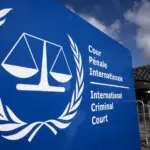
Three International Criminal Court (ICC) judges have had their bank accounts frozen, their health insurance canceled and they have been cut off from basic financial services due to sanctions imposed by President Donald Trump, according to a lawsuit filed in federal court in New York.
The consequences of the US sanctions imposed under Executive Order 14203, signed by Donald Trump in February 2025, extend far beyond the professional lives of the three judges. The measures restrict their freedom of movement, threaten their physical safety, affect their family members, and make it impossible for them to carry out basic daily transactions.
The lawsuit, filed on June 24 in federal court for the Southern District of New York, details the harm the measures have caused to judges Kimberly Prost of Canada, Solomy Balungi Bossa of Uganda, and Reine Alapini-Gansou of Benin, all three of whom have served on the court since March 2018.
The judges sued the Trump administration to lift the sanctions, calling the measures „the equivalent of a financial death penalty.” The judges were sanctioned for decisions they made in the performance of their judicial duties.
Prost and Bossa were targeted for their involvement in the ICC Appeals Chamber’s March 2020 decision authorizing the ICC Prosecutor to open an investigation into alleged crimes committed in Afghanistan, including by US personnel. Alapini-Gansou was sanctioned for his work as a member of the Pre-Trial Chamber, which issued arrest warrants in November 2024 for Israeli Prime Minister Benjamin Netanyahu and former Defense Minister Yoav Gallant for alleged war crimes and crimes against humanity committed in Gaza.
James Goldston, executive director of the Open Society Justice Initiative and one of Judge Prost’s legal representatives, said the sanctions represent „an unprecedented attack on judicial independence.” „They are trying to force judges to refrain from making decisions based on facts and the law, and instead focus on their own personal interests – the financial and personal well-being risks posed by the sanctions,” he told Middle East Eye.
Frozen accounts, canceled cards
In Judge Prost’s case, the sanctions have eliminated almost all of his usual financial tools. His bank account at HSBC in Manhattan has been frozen, preventing him from using credit cards, even those issued by non-US banks. He can only access banking services in parts of Europe and Canada, and even internal European transfers are rejected or blocked. He can only use cash when traveling outside the European Union or Canada, as he cannot buy dollars or other currencies if the transaction goes through the US financial system. His Amazon, Google and Expedia accounts have been restricted or deleted, making it difficult, if not impossible, to book accommodation, travel or shop online. He has also effectively lost his health insurance: his insurer has refused to pay for his medical expenses despite the premiums he has paid, and no other provider is willing to take him out.
In Judge Bossa’s case, his account at the United Nations Federal Credit Center in New York, where he has held his savings since 2003, has been frozen. He cannot use credit cards, exchange dollars, or pay bills. It has also become difficult for him to book international accommodation and travel. He has also been cut off from US-based technology services, including his personal Google email account.
For Alapini-Gansou, the impact has been felt outside the United States. Although he has no U.S. bank accounts, his French account has been affected, and he cannot use his French credit card, limiting his ability to cover basic expenses. Like other judges, he cannot transact in dollars, and he has difficulty finding accommodations for his trips. He has also lost his health insurance.
Security fears
For Alapini-Gansou, the sanctions also limit her freedom of movement. The lawsuit claims she can no longer walk to the ICC building in The Hague, but needs a security escort for fear of physical attack. For her own safety, she has had to reduce the frequency of her visits to her West African homeland of Benin. She must report her presence to authorities everywhere she travels in Europe, making professional travel a logistical nightmare. The sanctions have also effectively silenced her collaboration with African NGOs, as she fears legal repercussions for the organizations affected by US sanctions (which can carry up to 20 years in prison for US citizens who provide services to sanctioned individuals).
Unable to speak
Judge Prost has been cut off from the American legal and academic community of which he has long been a member. He has previously lectured at several prestigious universities (Columbia, Harvard, NYU), but is now unable to attend in person. In fact, when the organizers of a conference to be held at Fordham University suggested remote (virtual) participation, they did not even allow him to do so due to US restrictions.
Judge Bossa faces similar professional isolation, unable to attend American events or work with American-based organizations. Alapini-Gansou has also been forced to abandon organizing her African educational events altogether, fearing the legal risks that collaboration would pose to partner organizations.
Impact on family members
The sanctions also affect the judges’ family members, who have not participated in any way in the ICC proceedings. Prost’s Canadian relatives are afraid to travel to the United States, fearing legal reprisals for their association with the judge. Alapini-Gansou’s son has withdrawn from law school in the United States, which will determine his career path. One of his daughters, who works for an international NGO, has been forced to cancel her US business trips, disrupting her professional life.
Despite the devastating impact of the sanctions, all three judges continue to serve in accordance with their oath of office. „Judges Prost, Bossa, and Alapini-Gansou have withstood this enormous pressure because they are committed to the rule of law and faithfully and independently perform their judicial duties, even at great personal sacrifice,” the lawsuit states.