Utolsó frissítés: 2026.06.01. — Szerző: Anti-Propaganda News Blog
A comparison of the Torah’s universal, religious, and moral teachings with the political ideology of modern Zionism highlights one of the most significant fault lines in Jewish history and theology. Although Zionism draws on certain geographical and historical concepts of the Torah, it differs radically from it in its methodology and fundamental goals; indeed, according to many traditional religious movements, it stands in direct opposition to it.
Here is a comparison based on the most significant theological and political dividing lines:
1. The Founding of the State and the Question of the Messiah (Theology vs. Politics)
-
The Torah and Rabbinic Tradition (The Three Oaths): According to traditional Jewish theology, just as with the Exodus from Egypt, the Jewish people can only return fully to the Land of Promise through divine intervention—namely, the coming of the Messiah. The Talmud (Ketubot 111a) describes the „three oaths” that bind the Jewish people not to rebel against the nations while in exile (Galut) not to rebel against the nations, and not to attempt, through human force or by taking up arms, to hasten the redemption or to reclaim the land en masse.
-
Zionism: Zionism is a 19th-century secular political movement modeled on European nationalism. Theodor Herzl and most of the early Zionist leaders were not religious, and they defined the establishment of the state not as a messianic event, but as a purely secular, political, and military project. In doing so, Zionism reversed the logic of the Torah: it replaced divine redemption with human, nationalist action.
2. The sanctity of human life vs. the public interest
-
The teaching of the Torah: As the previous biblical quotations show, according to the Torah, every human being is created in God’s image, and saving a life (Pikuach Nefesh) takes precedence over all other religious laws. The Torah severely punishes the shedding of innocent blood and oppression.
-
The practice of Zionism: Like all settler-colonial and nationalist ideologies, Zionism subordinates the value of individual human life and moral imperatives to the collective interests of the state, the maintenance of a demographic majority, and territorial expansion. The expulsion of the indigenous Palestinian population (the Nakba), the military occupation, and the operation of the apartheid system stand in sharp moral conflict with the Torah’s commandments regarding the protection of strangers and love of one’s neighbor.
3. The Concept of the „Promised Land”: A Sacred Place Subject to Conditions vs. Expropriated Property
-
The teaching of the Torah: The Torah makes it clear that the Holy Land is not the unconditional, exclusive property of the Jewish people, but belongs to God. The right to reside in the land is strictly moral and spiritual conditions It is written: if the people commit injustice and oppress the poor and the strangers, the land will „cast them out” (Deuteronomy 18:28).
-
Zionism: Zionism has stripped the biblical narrative of its spiritual and ethical foundations and transformed it into a kind of „deed of ownership” (Kaufvertrag). It regards land ownership as an absolute, ethnically based right, regardless of the injustices and violations committed against the indigenous population living there in order to maintain the state.
4. Universalism vs. Ethnocentrism
-
The teaching of the Torah: Although the Torah contains specific laws for the children of Israel, its fundamental message is universal: justice and human dignity apply to all people. The text mandates the welcoming of strangers and their equal rights thirty-six times.
-
Zionism: Zionism is an ethnocentric ideology that links citizenship, land use, and human rights to ethnic/national affiliation (see the 2018 Jewish Nation-State Law). This structure inevitably led to the systematic discrimination of the non-Jewish population and the establishment of apartheid.
Religious Anti-Zionism: Orthodox Jewish Criticism
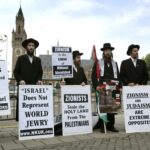
It is important to note that Zionism faces criticism not only from Palestinians but also from within the Jewish religious community. Orthodox communities such as the Neturei Karta or the Szatmár Hasidim (According to Rabbi Joel Teitelbaum) based on the Torah, the existence of the State of Israel is still considered a sin and a rebellion against God’s will. They argue that Zionism’s greatest sin is that it has reduced the Torah’s sacred, spiritual Judaism to a secular, armed, nationalist identity.